McGonnagle’s involvement with medical laboratory medicine spans five decades and 38 years of support for the nation’s anatomic pathologists and clinical laboratory professionals
The presentation was made in front of 950 attendees. During the presentation, several of McGonnagle’s peers described the multiple ways that he regularly supports the profession of clinical laboratory medicine.
In 1986, McGonnagle was engaged by the College of American Pathologists (CAP) to develop the concept of a new, tabloid-sized, color magazine to be called CAP Today. It was January 1987 when monthly publication of CAP Today formally commenced.
McGonnagle was again tapped by CAP to oversee production of another publication that was created in 1996. Since its inception, he has also been publisher of the Archives of Pathology and Laboratory Medicine.
During last week’s Executive War College on Diagnostic, Laboratory, and Pathology Management in New Orleans, Bob McGonnagle (center right) was honored with a Lifetime Achievement Award for his 38 years as Publisher of CAP Today, along with his innumerable contributions to advancing the clinical laboratory and anatomic pathology professions. McGonnagle is joined by Robert Michel, founder of the Executive War College on his right; Al Lui, MD, of Innovative Pathology Medical Group on his far right; and Stan Schofield of Compass Group on his left. (Photo copyright: The Dark Report.)
38 Years as Publisher of CAP Today Magazine
But McGonnagle’s duties as publisher are just the starting point of the contributions McGonnagle has made to the House of Laboratory Medicine in the past 38 years. He is regularly seen at pathology and lab meetings, conferences, and workshops throughout the United States and overseas. As a speaker and moderator, he is much in demand. He is often asked to sit in during strategic retreats and think tanks organized by laboratory associations, lab organizations, and lab vendors.
During the presentation ceremony, three of McGonnagle’s peers offered insights and examples of his unstinting support of pathologists, lab managers, and companies serving medical laboratories. First to speak was Stan Schofield, Managing Principal at Compass Group and past CEO of NorDx Laboratories in Scarborough, Maine.
“Bob McGonnagle is excellent as a moderator for conferences, meetings, and conventions and will always say ‘yes’ when asked to serve,” Schofield observed. “He is quick to recognize and adapt to emerging issues. He processes information from various parts of the lab industry, then generates insights and information all can understand and use to the benefit of their respective labs and pathology groups.”
Next to speak was pathologist Al Lui, MD, President and Medical Director, at Innovative Pathology Medical Group in Torrance, California. Lui has been active on committees and initiatives of CAP for decades. “Recognition of Bob McGonnagle’s past and continuing contributions to the profession of pathology and laboratory medicine is long overdue,” he said.
McGonnagle as Farmer, Fan of Classical Music, and Oenophile
Lui then presented slides that showed the range of McGonnagle’s activities outside of his publishing responsibilities. For example, Bob is remote manager of two inherited family farms in Iowa that produce corn, soybeans, and cattle. His wife competes in equestrian events. They are wine aficionados and close personal friends with one of Napa Valley’s most respected vintners.
One key figure in McGonnagle’s publishing activities is the Editor of CAP TodaySherrie Rice. She has served in this role since 1987 and thus has collaborated with Bob for the 38 years of CAP Today’s publication. “His leadership of the periodicals department at the CAP has been brilliant and working alongside him for more than three decades has been the gift of a lifetime,” Rice noted.
Rice also described an underappreciated aspect of McGonnagle’s efforts as Publisher. “Bob constantly works to connect the IVD manufacturers and lab vendors with labs that need and benefit from these solutions,” she noted. “He is quick to recognize emerging technologies and help explain them with in-depth stories in CAP Today that help pathologists and lab managers better understand when such innovations are ready to be implemented.”
A Career That Spans Five Decades
As McGonnagle was handed his Lifetime Achievement Award, Robert Michel, Founder of the Executive War College and Editor-in-Chief of Dark Daily and its sister publication The Dark Report, made several observations. “Bob McGonnagle has all the hallmarks of a loyal friend. He is always willing to help and never asks for anything in return,” Michel noted. “He is discreet and trustworthy, with keen powers of observation and analysis. Our profession is blessed that his career and contributions have spanned five decades.”
All of Bob McGonnagle’s colleagues, friends, and associates are encouraged to use social media to send him congratulations and notes of appreciation for his 38 years of service as Publisher of CAP Today, and for his many contributions to the clinical laboratory and pathology professions.
Here are social media links where it would be appropriate to post comments about Bob McGonnagle, with best wishes, congratulations, and examples of his selfless support:
But even though the College of American Pathologists (CAP) and nine other organizations signed a December 12 stakeholder letter to leaders of key House and Senate committees urging passage of legislation that would enable some regulation of LDTs, the VALID Act was ultimately omitted from the year-end omnibus spending bill (H.R. 2617).
That may be due to pressure from organizations representing clinical laboratories and pathologists which lobbied hard against the bill.
Responding to criticism of its stance on FDA oversight of LDTs, in a May 2022 open letter posted on the organization’s website, anatomic pathologist and CAP president Emily Volk, MD, said “we at the CAP have an honest difference of opinion with some other respected laboratory organizations. … We believe the VALID Act is the only viable piece of legislation addressing the LDT issue. … the VALID Act contains many provisions that are similar to policy the CAP has advocated for regarding the regulation of laboratory tests since 2009. Importantly, the current version includes explicit protections for pathologists and our ability to practice medicine without infringement from the Food and Drug Administration (FDA).” (Photo copyright: College of American Pathologists.)
Organizations on Both Sides Brought Pressure to Bear on Legislators
The AAMC and AMP were especially influential, Bucshon told ProPublica. In addition to spending hefty sums on lobbying, AMP urged its members to contact legislators directly and provided talking points, ProPublica reported.
“The academic medical centers and big medical centers are in every state,” Bucshon said. As major employers in many locales, they have “a pretty big voice,” he added.
Discussing CAP’s reasoning behind its support of the VALID Act in a May 26 open letter and podcast, CAP president Emily Volk, MD, said the Valid Act “creates a risk-based system of oversight utilizing three tiers—low, moderate and high risk—in order to target the attention of the FDA oversight.”
While acknowledging that it had room for improvement, she lauded the bill’s three-tier risk-based system, in which tests deemed to have the greatest risks would receive the highest level of scrutiny.
She also noted that the bill exempts existing LDTs from an FDA premarket review “unless there is a safety concern for patients.” It would also exempt “low-volume tests, modified tests, manual interpretation tests, and humanitarian tests,” she wrote.
In addition, the bill would “direct the FDA not to create regulations that are duplicative of regulation under CLIA,” she noted, and “would require the FDA to conduct public hearings on LDT oversight.”
Pros and Cons of the VALID Act
One concern raised by opponents relates to how the VALID Act addressed user fees paid by clinical laboratories to fund FDA compliance activities. But Volk wrote that any specific fees “would need to be approved by Congress in a future FDA user fee authorization bill after years of public input.”
During the May 2022 podcast, Volk also cast CAP’s support as a matter of recognizing political realities.
“We understand that support for FDA oversight of laboratory-developed tests or IVCTs is present on both sides of the aisle and in both houses of Congress,” she said. “In fact, it enjoys wide support among very influential patient advocacy groups.” These groups “are very sophisticated in their understanding of the issues with laboratory-developed tests, and they do have the ear of Congress. There are many in the laboratory community that believe the VALID Act goes too far, but I can tell you that many of these patient groups don’t believe it goes far enough and are actively pushing for even more restrictive paradigms.”
Also urging passage of the bill were former FDA commissioners Scott Gottlieb, MD, and Mark B. McClellan, MD, PhD. In a Dec. 5 opinion piece for STAT, they noted that “diagnostic technologies have undergone considerable advances in recent decades, owing to innovation in fields like genomics, proteomics, and data science.” However, they wrote, laws governing FDA oversight “have not kept pace,” placing the agency in a position of regulating tests based on where they are made—in a medical laboratory or by a manufacturer—instead of their “distinctive complexity or potential risks.”
In their May 22 letter, opponents of the legislation outlined broad areas of concern. They contended that it would create “an onerous and complex system that would radically alter the way that laboratory testing is regulated to the detriment of patient care.” And even though existing tests would be largely exempted from oversight, “the utility of these tests would diminish over time as the VALID Act puts overly restrictive constraints on how they can be modified.”
CLIA Regulation of LDTs also Under Scrutiny
The provision to avoid duplication with the Clinical Laboratory Improvement Amendments (CLIA) program—which currently has some regulatory oversight of LDTs and IVCTs—is “insufficient,” opponents added, “especially when other aspects of the legislation call for requirements and activities that lead to duplicative and unnecessary regulatory burden.”
Opponents to the VALID Act also argued that the definitions of high-, medium-, and low-risk test categories lacked clarity, stating that “the newly created definition of moderate risk appears to overlap with the definition of high risk.”
The opponents also took issue with the degree of discretion that the bill grants to the US Secretary of Health and Human Services. This will create “an unpredictable regulatory process and ambiguities in the significance of the policy,” they wrote, while urging the Senate committee to “narrow the discretion so that stakeholders may better evaluate and understand the implications of this legislation.”
Decades ago, clinical laboratory researchers were allowed to develop assays in tandem with clinicians that were intended to provide accurate diagnoses, earlier detection of disease, and help guide selection of therapies. Since the 1990s, however, an industry of investor-funded laboratory companies have brought proprietary LDTs to the national market. Many recognize that this falls outside the government’s original intent for encouragement of laboratory-developed tests to begin with.
Factors contributing to shortage of med techs and other lab scientists include limited training programs in clinical laboratory science, pay disparity, and staff retention, notes infectious disease specialist Judy Stone, MD
Staff shortages are a growing challenge for medical laboratories, and now the problem has grabbed the attention of a major media outlet.
In a story she penned for Forbes, titled, “We’re Facing a Critical Shortage of Medical Laboratory Professionals,” senior contributor and infectious disease specialist Judy Stone, MD, wrote, “Behind the scenes at every hospital are indispensable medical laboratory professionals. They performed an estimated 13 billion laboratory tests in the United States each year before COVID. Since the pandemic began, they have also conducted almost 997 million diagnostic tests for COVID-19. The accuracy and timeliness of lab tests are critically important, as they shape approximately two-thirds of all medical decisions made by physicians.”
Though Stone states in her Forbes article that clinical laboratories in both the US and Canada are facing staff shortages, she notes that the problem is more acute in the US.
As Dark Daily reported in February, the so-called “Great Resignation” caused by the COVID-19 pandemic has had a severe impact on clinical laboratory staffs, creating shortages of pathologists as well as of medical technologists, medical laboratory technicians, and other lab scientists who are vital to the nation’s network of clinical laboratories.
In her analysis, however, Stone accurately observes that the problem pre-dates the pandemic. For examples she cites two surveys conducted in 2018 by the American Society for Clinical Pathology (ASCP):
Many pathologists and clinical laboratory managers would agree that Stone is right. Dark Daily has repeatedly reported on growing staff shortages at clinical laboratories worldwide.
And in “Lab Staffing Shortages Reaching Dire Levels,” Dark Daily’s sister publication, The Dark Report, noted that CAP Today had characterized the current lab staffing shortage as going “from simmer to rolling boil” and that demand for medical technologists and other certified laboratory scientists far exceeds the supply. Consequently, many labs now use overtime and temp workers to handle daily testing, a strategy that has led to staff burnout and more turnover.
“There is a critical shortage of medical laboratory professionals in the US, and in Canada to a lesser extent,” wrote infectious disease specialist Judy Stone, MD (above), in an article she penned for Forbes. “Here [in the US],” she added, “we are 20-25,000 short on staff, with only 337,800 practicing. That is roughly one medical laboratory scientist per 1,000 people.” Clinical laboratories are well aware of the problem. A solution to solve it and return labs to former staffing levels is proving elusive. (Photo copyright: Forbes.)
Why the Shortfall?
In her Forbes article, Stone notes the following as factors behind the shortages:
Decline in training programs. “There are only [approximately] 240 medical laboratory technician and scientist training programs in the US, a 7% drop from 2000,” Stone wrote, adding that some states have no training programs at all. She notes that lab technicians must have a two-year associate degree while it takes an average of five years of post-secondary education to obtain a lab science degree.
Pay disparities. Citing data from the ASCP, Stone wrote that “medical lab professionals are paid 40%-60% less than nurses, physical therapists, or pharmacists.” Moreover, given the high cost of training, “many don’t feel the salary is worth the high investment,” she added.
Staff retention. In the ASCP’s 2018 job satisfaction survey, 85.3% of respondents reported burnout from their jobs, 36.5% cited problems with inadequate staffing, and nearly that many complained that workloads were too high.
Inconsistent licensing requirements. These requirements “are different from state to state,” Stone wrote. For example, the American Society for Clinical Laboratory Science (ASCLS) notes that 11 states plus Puerto Rico mandate licensure of laboratory personnel whereas others do not. Each of those states has specific licensing requirements, and while most offer reciprocity for other state licenses, “California [for example] does not recognize any certification or any other state license.”
In a 2018 report, “Addressing the Clinical Laboratory Workforce Shortage,” the ASCLS cited other factors contributing to the shortages, including retirement of aging personnel and increased demand for lab services.
Possible Solutions
Stone suggested the following remedies:
Improve working conditions. “We need to reduce the stress and workload of the lab professionals before we reach a greater crisis,” Stone wrote.
Standardize state certification. This will facilitate “mobility of staff and flexibility in responding to needs,” Stone suggested.
Improve education and training opportunities. The ASCLS has called for clinical lab science to be included in the Title VII health professions program, which provides funding for healthcare training. Rodney Rohde, PhD, a clinical laboratory science professor at Texas State University, “also suggests outreach to middle and high school STEM programs, to familiarize students early with career opportunities in the medical laboratory profession,” Stone wrote.
Recruit foreign workers. Stone suggested this as an interim solution, with programs to help them acclimate to practice standards in the US.
It will likely take multiple solutions like these to address the Great Resignation and bring the nation’s clinical laboratory staffing levels back to full. In the meantime, across the nation, a majority of clinical laboratories and anatomic pathology groups operate short-staffed and use overtime and temporary workers as a partial answer to their staffing requirements.
The researchers believe their test ‘could reduce the number of unnecessary prostate cancer biopsies by 32%,’ UEA reported
New diagnostic technologies may make it possible for men to provide a urine sample that can allow a clinical laboratory to not only accurately diagnose prostate cancer but also help determine whether it is an aggressive form of prostate cancer. Researchers in the United Kingdom (UK) recently described just such a test in an online, peer-reviewed journal.
Development of a non-invasive method of diagnosing prostate cancer would be significant for anatomic pathologists in the United States. In the US alone, approximately 248,000 men will be diagnosed with this type of cancer in 2021. Prostate biopsies represent a major proportion of case referrals to community pathology groups.
Moreover, were such a non-invasive test for prostate cancer also able to identify those individuals with fast-growing prostate cancers, that would help urologists make more informed treatment decisions.
A Disease Men More Commonly Die ‘With’ Rather than ‘From’
According to CDC statistics, most men over the age of 80 will have some form of slow-growing prostate cancer when they die. However, a percentage of men each year contract a rapidly growing aggressive form of the cancer, and until recently, diagnosing which cancer a patient was fighting often required multiple invasive prostate needle biopsies. But that may soon change.
Researchers at the University of East Anglia (UEA) Norwich Medical School in the United Kingdom (UK) have developed a non-invasive urine test for prostate cancer that they say also can determine the aggressiveness of the disease. Knowing this may help physicians better assess a patient’s risk prior to ordering invasive needle biopsies, a UEA article notes.
The UEA test may also allow for self-collection of the biological sample, and if it proves accurate, the test could bring additional revenue to clinical laboratories that would perform the urine testing.
“In this work we develop a test that predicts whether a patient has prostate cancer and how aggressive the disease is from a urine sample. This model combines the measurement of a protein-marker called EN2 and the levels of 10 genes measured in urine and proves that integration of information from multiple, non-invasive biomarker sources has the potential to greatly improve how patients with a clinical suspicion of prostate cancer are risk-assessed prior to an invasive biopsy,” they wrote.
“While prostate cancer is responsible for a large proportion of all male cancer deaths, it is more commonly a disease men die with rather than from,” said Daniel Brewer, PhD, one of the lead researchers on this study. “Therefore, there is a desperate need for improvements in diagnosing and predicting outcomes for prostate cancer patients to minimize over-diagnosis and overtreatment whilst appropriately treating men with aggressive disease, especially if this can be done without taking an invasive biopsy.
“Invasive biopsies come at considerable economic, psychological, and societal cost to patients and healthcare systems alike,” he added. Brewer is Senior Lecturer in Cancer Bioinformatics and a group leader within the Cancer Genetics Team at UEA’s Norwich Medical School.
“Our new urine test not only shows whether a patient has prostate cancer, but it importantly shows how aggressive the disease is. This allows patients and doctors to select the correct treatment,” said Daniel Brewer, PhD (above), Senior Lecturer and Lead Researcher, UEA Norwich Medical School, in the news release. (Photo copyright: Eastern Daily Press.)
Possibility of Reducing Needle Biopsies by 32%
Called “ExoGrail,” the UEA’s new test builds on their earlier development of the Prostate Urine Risk (PUR) and ExoMeth tests. The test works by integrating two biomarkers.
Levels of gene expression of 10 genes related to prostate cancer.
The researchers tested ExoGrail on urine samples from 207 patients at Norfolk and Norwich University Hospital (NNUH) who also had needle biopsy samples available.
According to the published study, the UEA ExoGrail urine test enabled:
Results comparable to the biopsy findings.
Identification of people with prostate cancer and people without it.
Risk scoring that noted aggressive prostate cancer and need for biopsy.
Potential to reduce unnecessary biopsies by 32%.
“ExoGrail resulted in accurate predictions even when serum PSA [protein-specific antigen] levels alone proved inaccurate; patients with a raised PSA but negative biopsy result possessed ExoGrail scores significantly different from both clinically benign patients and those with low-grade Gleason 6 disease, whilst still able to discriminate between more clinically significant Gleason ≥ 7 cancers,” the researchers stated in their published study.
“The adoption of ExoGrail into current clinical pathways for reducing unnecessary biopsies was considered, showing the potential for up to 32% of patients to safely forgo an invasive biopsy without incurring excessive risk,” they noted.
Prostate Cancer Patients May Soon Have Options
While more research is needed, the new UEA Norwich Medical School ExoGrail test introduces compelling non-invasive methods for diagnosing prostate cancer. Patients with findings of aggressive cancer can proceed to biopsies, while others determined to have non-aggressive forms of prostate cancer may be able to avoid more invasive tests and the associated costs and stress.
Additionally, men may soon be able to collect their own specimens without the need to visit the primary care doctor or a patient service center.
A follow-up study underway at the University of East Anglia and the NNUH involves sending 2,000 men in the UK, Europe, and Canada home testing “prostate screening boxes” to “to collect men’s urine samples at-home,” according to a UEA new release, which noted that “the Prostate Screening Box has been developed in collaboration with REAL Digital International Limited to create a kit that fits through a standard letterbox.”
“We have developed the PUR (Prostate Urine Risk) test, which looks at gene expression in urine samples and provides vital information about whether a cancer is aggressive or ‘low risk,’” said Jeremy Clark, PhD, Senior Research Associate at UEA’s Norwich Medical School.
“The Prostate Screening Box part sounds like quite a small innovation, but it means that in future the monitoring of cancer in men could be so much less stressful for them and reduce the number of expensive trips to the hospital,” he added.
Anatomic pathologists and clinical laboratory managers will want to follow the progress of these clinical studies. A non-invasive, urine-based test for prostate cancer could be a game-changer if it can detect prostate cancer with comparable accuracy to the tissue-based diagnostics that are the current standard of care in the diagnosis of prostate cancer.
Four International Pandemics That Occurred Prior to COVID-19 and Contributed to Increased Clinical Laboratory Testing to Aid in Managing the Outbreaks
Since 1900, millions have died worldwide from previous viruses that were as deadly as SARS-CoV-2. But how much do pathologists and clinical laboratory scientists know about them?
SARS-CoV-2 continues to infect populations worldwide. As of May 28, 2021, the World Health Organization (WHO) reported that 168,599,045 people have been diagnosed with COVID-19 infections globally, and 3,507,377 individuals have perished from the coronavirus.
At the same time, federal Centers for Disease Control and Prevention (CDC) statistics show there have been 33,018,965 cases of COVID-19 in the United States, 589,547 of which resulted in death.
But COVID-19 is just the latest in a string of pandemics that spread across the planet in the past century. Since 1900, there have been four major international pandemics resulting in millions of deaths. But how many people even remember them? And how many pathologists, microbiologists, and clinical laboratory scientists working today experienced even the most recent of these four global pandemics?
Here is a summary/review of these major pandemics to give clinical laboratory professionals context for comparing the COVID-19 pandemic to past pandemics.
Spanish Flu of 1918
The 1918 influenza pandemic, commonly referred to as the Spanish Flu, was the most severe and deadliest pandemic of the 20th century. This pandemic was caused by a novel strand of the H1N1 virus that had avian origins. It is estimated that approximately one third of the world’s population (at that time) became infected with the virus.
According to a CDC article, the flu pandemic of 1918 was responsible for at least 50 million deaths worldwide, with about 675,000 of those deaths occurring in the United States. This pandemic had an unusually high death rate among healthy individuals between the ages of 15 and 34 and actually lowered the average life expectancy in the United States by more than 12 years, according to a CDC report, titled, “The Deadliest Flu: The Complete Story of the Discovery and Reconstruction of the 1918 Pandemic Virus.”
Interestingly, experts feel the 1918 flu strain never fully left us, but simply weakened and became less lethal as it mutated and passed through humans and other animals.
“All those pandemics that have happened since—1957, 1968, 2009—all those pandemics are derivatives of the 1918 flu,” he told The Washington Post. “The flu viruses that people get this year, or last year, are all still directly related to the 1918 ancestor.”
1957 Asian Flu
The H2N2 virus, which caused the Asian Flu, first emerged in East Asia in February 1957 and quickly spread to other countries throughout Asia. The virus reached the shores of the US by the summer of 1957, where the number of infections continued to rise, especially among the elderly, children, and pregnant women.
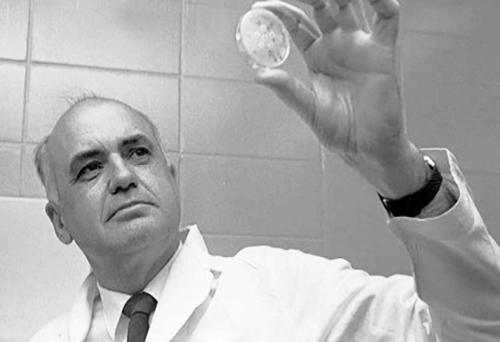
Between 1957-1958, the Asian Flu spread across the planet causing between one to two million deaths, including 116,000 deaths in the US alone. However, this pandemic could have been much worse were it not for the efforts of microbiologist and vaccinologist Maurice Hilleman, PhD, who in 1958 was Chief of the Department of Virus Diseases at Walter Reed Army Medical Center.
Concerned that the Asian flu would wreak havoc on the US, Hilleman—who today is considered the father of modern vaccines—researched and created a vaccine for it in four months. Public health experts estimated the number of US deaths could have reached over one million without the fast arrival of the vaccine, noted Scientific American, adding that though Hilleman “is little remembered today, he also helped develop nine of the 14 children’s vaccines that are now recommended.”
During his lifetime, Maurice Hilleman, PhD (above), developed a staggering 40 vaccines to help prevent everything from measles, mumps, rubella, pneumonia, meningitis, hepatitis A and B, and other infectious diseases. (Photo copyright: Scientific American.)
1968 Hong Kong Flu
The 1968 influenza pandemic known as the Hong Kong flu emerged in China and persisted for several years. Within weeks of its emergence in the heavily populated Hong Kong, the flu had infected more than 500,000 people. Within months, the highly contagious virus had gone global.
According to the Encyclopedia Britannica, this pandemic was initiated by the influenza A subtype H3N2 virus and is suspected to have evolved from the viral strain that caused the 1957 flu pandemic through a process called antigenic shift. In this case, the hemagglutinin (H) antigen located on the outer surface of the virus underwent a genetic mutation to manufacture the new H3 antigen. Persons who had been exposed to the 1957 flu virus seemed to retain immune protection against the 1968 virus, which, Britannica noted, could help explain the relative mildness of the 1968 outbreak.
It is estimated that the 1968 Hong Kong Flu killed one to four million people worldwide, with approximately 100,000 of those deaths occurring in the US. A vaccine for the virus was available by the end of 1968 and the outbreaks appeared to be under control the following year. The H3N2 virus continues to circulate worldwide as a seasonal influenza A virus.
2009 H1N1 Swine Flu
In the spring of 2009, the novel H1N1 influenza virus that caused the Swine Flu pandemic was first detected in California. It soon spread across the US and the world. This new H1N1 virus contained a unique combination of influenza genes not previously identified in animals or people. By the time the World Health Organization (WHO) declared this flu to be a pandemic in June of 2009, a total of 74 countries and territories had reported confirmed cases of the disease. The CDC estimated there were 60.8 million cases of Swine Flu infections in the US between April 2009 and April 2010 that resulted in approximately 274,304 hospitalizations and 12,469 deaths.
This pandemic primarily affected children and young and middle-aged adults and was less severe than previous pandemics. Nevertheless, the H1N1 pandemic dramatically increased clinical laboratory test volumes, as Dark Daily’s sister publication, The Dark Report, covered in “Influenza A/H1N1 Outbreak Offers Lessons for Labs,” TDR June 8, 2009.
“Laboratories in the United States experienced a phenomenal surge in specimen volume during the first few weeks of the outbreak of A/H1N1. This event shows that the capacity in our nation’s public health system for large amounts of testing is inadequate,” Steven B. Kleiboeker, DVM, PhD, told The Dark Report. At that time Kleiboeker was Chief Scientific Officer and a Vice-President of ViraCor Laboratories in Lee’s Summit, Mo.
1.7 Million ‘Undiscovered’ Viruses
As people travel more frequently between countries, it is unlikely that COVID-19 will be the last pandemic that we encounter. According to the World Economic Forum (WEF), there are 1.7 million “undiscovered” viruses that exist in mammals and birds and approximately 827,000 of those viruses have the ability to infect humans.
Thus, it remains the job of pathologists and clinical laboratories worldwide to remain ever vigilant and prepared for the next global pandemic.