Outspoken Wecht wants readers to understand ‘the multifaceted challenges of the interface of law and medicine’
Pathologists will recognize the name of nationally-acclaimed forensic pathologist Cyril Wecht, MD, JD, who for more than a half-century has been at the center of many of the country’s highest-profile civil and criminal cases. Thus, Dark Daily readers will be intrigued to learn the so-called “godfather of forensic pathology” has published a memoir that takes readers behind the scenes of many of his most controversial forensic pathology cases.
In his recently published memoir (above), forensic pathologist Cyril Wecht, MD, JD, offers readers an inside look at some of his most controversial cases, as well as a defense of his own brushes with the legal system. Anatomic and clinical pathologists may be especially intrigued by Wecht’s description of how “he was acquitted on charges of personally profiting from his office as Allegheny County Coroner” during a federal public corruption charge that was dismissed in 2008, the book’s description states. (Photo copyright: Exposit Books.)
A ‘No-Holds-Barred’ Account
According to TribLIVE, the book—written by Wecht and award-winning writer/filmmaker Jeff Sewald—is a “no-holds-barred account” of Wecht’s personal and professional life. Among the more interesting tidbits are details regarding Wecht’s 1972 discovery that JFK autopsy materials and specimens had gone missing.
“They had been in the government’s possession, so nobody could have touched them, but now the metal container which has held John Kennedy’s brain in formalin was no longer on the list of contents. In addition, various photographs and microscopic tissue slides were also no longer listed. The President’s brain was missing!” wrote Wecht, who argued Lee Harvey Oswald did not act alone in killing JFK and may not have fired the shots that killed him.
In 2006, Wecht faced an 84-count federal public corruption trial, which resulted in him resigning as Alleghany, Pa. medical examiner, the Pittsburgh Post-Gazette reported. In his memoir, Wecht wrote extensively about his public corruption trial. TribLIVE noted Wecht “expresses particular disgust” over the accusation that he supplied Pittsburgh’s Carlow University with cadavers in exchange for use of their laboratory space for his own practice. His trial ended in a hung jury.
“The body-snatching issue was seized upon by the media and was the subject of some of the most horrible cartoons ever,” Wecht wrote. “What made them especially horrible was the fact that I believe anti-Semitism was at their core. They made me look wicked and shadowy, like a ‘Shylock’ who was willing to stoop as low as selling human corpses for a handful of shekels. It was sickening.”
Wecht became known nationally through media appearances and his many decades of work as a medical-legal consultant in civil and criminal cases. At the 2000 Forensic Science and the Law Conference, television host and political commentator Geraldo Rivera, JD, stated, “I’ve known Cyril Wecht for most of my 30-year broadcasting career, and my respect for him has only grown over the decades. His skills as an attorney, as a pathologist, as a medical examiner are legendary.
“Dr. Wecht has guided my audiences through our coverage of crimes ranging from the Kennedy assassination to the O.J. Simpson trial to the JonBenet Ramsey murder mystery,” Rivera added. “And whether or not my audiences knew it, they were getting an education in forensic science—and a lesson in how medical science is applied to this country’s criminal laws.”
An ‘Expert’ and an ‘Irritant’
Though also certified in anatomic pathology and clinical pathology, Wecht has spent his career as a forensic pathologist focused on determining the cause of death. He has performed approximately 17,000 autopsies and has supervised, reviewed, or been consulted on approximately 30,000 additional postmortem examinations, the Cyrilwecht.com website states.
Cyril Wecht, MD, JD (above), told the Pittsburgh Jewish Chronicle that he wrote this memoir so readers could understand the “… complexity and the multifaceted challenges of the interface of law and medicine, specifically in the realm of pathology, and how important it is for justice to be served, with the input from forensic science, and how the system can be subverted, perverted, suppressed, and manipulated.” (Photo copyright: Pittsburg Business Times.)
Pathologists who followed Wecht’s career may know of his reputation “as both an expert and an irritant,” noted the Pittsburg Post-Gazette. For his part, Wecht stated, “If I had been a bit more diplomatic and patient, and a little less antagonistic and controversial, I might have achieved more,” the newspaper reported.
Anyone interested in forensic pathology will likely enjoy reading the behind-the-scenes stories from Wecht’s more than six decades of work. But Wecht’s memoir should be particularly intriguing and informative for clinical and anatomic pathologists, as well as all medical laboratory scientists.
The No Surprises Act, passed as part of the COVID-19 relief package, ensures patients do not receive surprise bills after out-of-network care, including hospital-based physicians such as pathologists
Consumer demand for price transparency in healthcare has been gaining support in Congress after several high-profile cases involving surprise medical billing received widespread reporting. Dark Daily covered many of these cases over the years.
Now, after initial opposition and months of legislative wrangling, organizations representing medical laboratories and clinical pathologists have expressed support for new federal legislation that aims to protect patients from surprise medical bills, including for clinical pathology and anatomic pathology services.
The new law Congress passed is known as the No Surprises Act (H.R.3630) and is part of the $900 billion COVID relief and government funding package signed by President Trump on December 27.
The law addresses the practice of “balance billing,” in which patients receive surprise bills for out-of-network medical services even when they use in-network providers. An ASCP policy statement noted that “a patient (consumer) may receive a bill for an episode of care or service they believed to be in-network and therefore covered by their insurance, but was in fact out-of-network.” This, according to the ASCP, “occurs most often in emergency situations, but specialties like pathology, radiology, and anesthesiology are affected as well.”
Most portions of the No Surprises Act take effect on January 1, 2022. The law prohibits balance billing for emergency care, air ambulance transport, or, in most cases, non-emergency care from in-network providers. Instead, if a patient unknowingly receives services from an out-of-network provider, they are liable only for co-pays and deductibles they would have paid for in-network care.
New Law Bars Pathologists from Balance Billing without Advance Patient Consent
The law permits balance billing under some circumstances, but only if the patient gives advance consent. And some specialties, including pathologists, are barred entirely from balance billing.
The law also establishes a process for determining how healthcare providers are reimbursed when a patient receives out-of-network care. The specifics of that process proved to be a major sticking point for providers. In states that have their own surprise-billing protections, payment will generally be determined by state law. Otherwise, payers and providers have 30 days to negotiate payment. If they can’t agree, payment is determined by an arbiter as part of an independent dispute resolution (IDR) process.
Early Proposal Drew Opposition
An early proposal to prohibit surprise billing drew opposition from a wide range of medical societies, including the ASCP, CAP, and the American Medical Association (AMA).
All were signatories to a July 29, 2020, letter sent to leaders of the US Senate and House of Representatives urging them to hold off from enacting surprise billing protections as part of COVID relief legislation. Though the groups agreed in principle with the need to protect patients from surprise billing, they contended that the proposed legislation leaned too heavily in favor of insurers, an ASCP news release noted.
“Legislative proposals that would dictate a set payment rate for unanticipated out-of-network care are neither market-based nor equitable, and do not account for the myriad inputs that factor into payment negotiations between insurers and providers,” the letter stated. “These proposals will only incentivize insurers to further narrow their provider networks and would also result in a massive financial windfall for insurers. As such, we oppose the setting of a payment rate in statute and are particularly concerned by proposals that would undermine hospitals and front-line caregivers during the COVID-19 pandemic.”
On December 11, leaders of key House and Senate committees announced agreement on a bipartisan draft of the bill that appeared to address these concerns, including establishment of the arbitration process for resolving payment disputes.
However, in a letter sent to the committee chairs and ranking members, the AHA asked for changes in the dispute-resolution provisions, including a prohibition on considering Medicare or Medicaid rates during arbitration. “We are concerned that the IDR process may be skewed if the arbiter is able to consider public payer reimbursement rates, which are well known to be below the cost of providing care,” the association stated. However, legislators agreed to the change after last-minute negotiations.
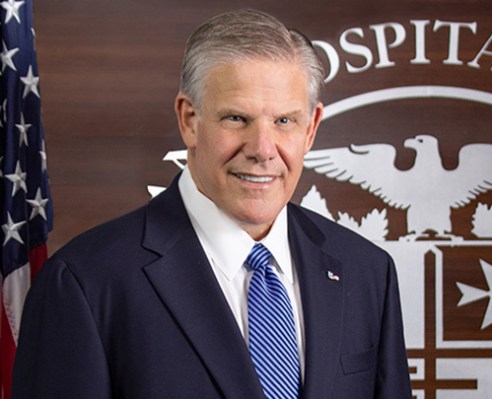
“The AHA is pleased that Congress rejected approaches that would impose arbitrary rates on providers, which could have significant consequences far beyond the scope of surprise medical bills and impact access to hospital care,” AHA President and CEO Rick Pollack (above) said in a statement. “We also applaud Congress for rejecting attempts to base rates on public payers.” (Photo copyright: American Hospital Association.)
Dispute Resolution for Pathologists
The CAP also expressed support for the final bill. In a statement, CAP noted that “As the legislation evolved during the 116th Congress, CAP members met with their federal lawmakers to discuss the CAP’s policy priorities.
“Through the CAP’s engagement and collaboration with other physician associations, the legislation improved drastically,” the CAP stated. “Specifically, the CAP lobbied Congress to hold patients harmless, establish a fair reimbursement formula for services provided, deny insurers the ability to dictate payment, create an independent dispute resolution (IDR) process that pathologists can participate in, and require network adequacy standards for health insurers.”
As laboratory testing was identified by thousands of respondents to the University of Chicago survey as the top surprise bill, it is likely that billing and transparency in charges for clinical pathologist and anatomic pathologist will continue to be scrutinized by law makers and healthcare associations.
CAP president maintains medical laboratory staff are ‘indispensable’ in pandemic fight and should be in ‘top tier’ for vaccination
As COVID-19 vaccinations continue to roll out, the College of American Pathologists (CAP) is lobbying for clinical pathologists and medical laboratory staff to be moved up the priority list for vaccinations, stating they are “indispensable” in the pandemic fight.
In a news release, CAP’s President Patrick Godbey, MD, FCAP argued for the early vaccination of laboratory workers, “It is essential that early access to the vaccine be provided to all pathologists and laboratory personnel,” he said. “Pathologists have led throughout this pandemic by bringing tests for the coronavirus online in communities across the country and we must ensure that patient access to testing continues. We must also serve as a resource to discuss the facts about the vaccine and answer questions patients, family members, and friends have about why they should get the vaccine when it is available to them.”
In a phone call following a virtual press conference, pathologists and CAP President Patrick Godbey, MD (above), told MedPage Today that even if medical laboratory staff are not directly in contact with patients, they should be considered “top tier” (designated as Phase 1a) for getting the vaccine. “I think they [clinical laboratory workers] should be considered in the same tier as nurses,” said Godbey, who also is Laboratory Director at Southeastern Pathology Associates and Southeast Georgia Health System in Brunswick, Ga. “They’re indispensable. Without them, there’d be no one to run the tests.” (Photo copyright: Southeast Georgia Health System.)
Who Does CDC Think Should Be First to Be Vaccinated?
According toThe New York Times (NYT), there are an estimated 21 million healthcare workers in the United States, making it basically “impossible,” the NYT wrote, for them all to get vaccinated in the first wave of COVID-19 vaccinations.
A December 11, 2020, CDC Morbidity and Mortality Weekly Report, titled, “ACIP Interim Recommendation for Allocating Initial Supplies of COVID-19 Vaccine—United States, 2020,” notes that “The [federal] Advisory Committee on Immunization Practices (ACIP) recommended, as interim guidance, that both 1) healthcare personnel and 2) residents of long-term care facilities be offered COVID-19 vaccine in the initial phase of the vaccination program.”
The ACIP report defines healthcare personnel as “paid and unpaid persons serving in healthcare settings who have the potential for direct or indirect exposure to patients or infectious materials.”
However, a CDC terminology guidance document listed at the bottom of the ACIP report states, “For this update, HCP [Healthcare Personnel] does not include dental healthcare personnel, autopsy personnel, and laboratory personnel, as recommendations to address occupational infection prevention and control (IPC) services for these personnel are posted elsewhere.”
In part, the letter stated, “We are convinced that ACIP did not intend to exclude any healthcare workers from its recommendation to offer vaccinations to healthcare personnel in the initial phase of the COVID-19 vaccination program (Phase 1a). However, we would hate for jurisdictions to overlook dental, autopsy, and laboratory personnel because of a minor footnote in [CDC] guidance that was developed for an entirely different purpose (i.e., infection control).
“We respectfully ask CDC to clarify,” the letter continues, “… that all healthcare workers—including dental, autopsy, and laboratory personnel—are among those who should be given priority access to vaccine during the initial phase of the COVID-19 vaccination program.”
“In the laboratory, they are encountering and handling thousands of samples that have active live virus in them,” said Karger, who called clinical laboratory staff and phlebotomists the “forgotten” frontline healthcare workers. “We’re getting 10,000 samples a day. That’s a lot of handling of infectious specimens, and we do want [staff] to be prioritized for vaccination.”
Karger continued to stress the vital role clinical laboratories play not only in COVID-19 testing but also in the functioning of the overall health system. She added that staff burnout is a concern since laboratory staff have been working “full throttle” since March.
“From an operational standpoint, we do need to keep our lab up and running,” she said. “We don’t want to have staff out such that we would have to decrease our testing capacity, which would have widespread impacts for our health system and state.”
Testing for Post-Vaccine Immunity
The CAP panelists also highlighted the need to prepare for the aftermath of widespread COVID-19 vaccinations—the need to test for post-vaccine immunity.
“It’s not routine practice to check antibody levels after getting a vaccine but given the heightened interest in COVID testing, we are anticipating there is going to be some increased in demand for post-vaccine antibody testing,” Karger said. “We’re at least preparing for that and preparing to educate our providers.”
Karger pointed out that clinical pathologists will play an important role in educating providers about the type of antibody tests necessary to test for COVID-19 immunity, because, she says, only the SARS-CoV-2 spike protein antibody test will check for an immune response.
With the pandemic expected to stretch far into 2021, clinical laboratories will continue to play a crucial role in the nation’s healthcare response to COVID-19. As essential workers in the fight against infectious disease, clinical pathologists, clinical chemists, and all medical laboratory staff should be prioritized as frontline healthcare workers.
As demand for SARS-CoV-2 coronavirus testing increases, leaders of the College of American Pathologists meet online to brainstorm possible solutions to the crisis
In September, the College of American Pathologists (CAP) began its series of “virtual media briefings” given by leading pathologists and physicians at the forefront of COVID-19 testing which are designed to “offer insights and straight talk” on the crisis confronting today’s clinical laboratories.
During the third virtual meeting on December 9, presenters discussed how the ever-increasing demand for COVID-19 testing has placed an enormous amount of stress on clinical laboratories, medical technologists (MTs), and clinical laboratory scientists (CLSs) responsible for processing the high volume of SARS-CoV-2 tests, and on the supply chains medical laboratories depend on to receive and maintain adequate supplies of testing materials.
“As soon as we get one set of supplies, then it’s another set of supplies that we can’t get our hands on,” said Christine Wojewoda, MD, Clinical Pathologist and Associate Professor at the University of Vermont Medical Center, during the third CAP virtual briefing. “Right now, we’re very concerned that our lab can’t get pipette tips that have a certain filter in them to transfer patient samples into the tubes that we need, or the plates that we need to do the testing. If we can’t get the patient sample into where it needs to go, safely, without contaminating other patient samples, that’s a big issue.”
Other members of the CAP panel concurred with Wojewoda and indicated that their clinical labs also are encountering supply chain challenges.
“It’s a daily battle,” said Amy Karger, MD, PhD, Clinical Pathologist and Associate Professor at University of Minnesota Physicians. “One of our managers spends hours a day making sure our lab has enough supplies, plastics, and chemicals to do the testing that we want to do. And he is often having to look for alternative solutions for COVID-19 testing, making phone calls, trying to find alternative products, and so we have a consistent worry about that.”
A June survey of CAP-accredited laboratories for COVID-19 testing found that more than 60% of lab directors reported difficulties in procuring critical supplies needed to conduct COVID-19 testing. The respondents indicated they encountered substantial barriers to obtaining equipment needed for SARS-CoV-2 testing—particularly test kits (69%), swabs (66%), and transport media (62%).
Staff Burnout and Shortages at Many Medical Laboratories
Karger also indicated that she is concerned about staff burnout and the toll the workload is taking on medical technologists at her laboratory.
“Lab staff have been working full throttle since March. I think that is often lost on people. They kind of assumed that when cases were low with COVID-19, that maybe the lab staff got a break. Well, that wasn’t the case,” she stated, adding, “They [the medical technologists] were planning for this surge that we’re experiencing now and have been working often seven days a week, double shifts to get us to this point of high testing capacity [to respond to the demand for COVID-19 testing].”
Another member of the CAP panel echoed Karger’s concerns.
“We worry about that as well,” said Patrick Godbey, MD, Founder and Laboratory Director at Southeastern Pathology Associates and current CAP President. “This demand for COVID-19 testing has made an already bad situation worse because there’s an absolute shortage of medical laboratory personnel and the increased demands on clinical labs have made this shortage even more acute.”
Almost all of the surveyed CAP-accredited laboratories reported losses in revenue and financial stress since the pandemic started. But few had applied for any of the available funds offered through federal assistance programs. The survey found that the top issues among pathologists reported by laboratory directors were:
reduced work hours (72%),
reductions in pay (41%),
increased burnout (21%), and
increased work hours (20%).
According to the survey, the top stresses affecting non-pathologist professionals working in clinical labs were:
The diminishing labor pool trained for COVID-19 testing—coupled with high stress/burnout among existing staff—is a major impediment to ongoing expansion in the daily number of molecular COVID-19 tests that can be performed by the nation’s labs.
Also, the already-tight supply of med techs means many metropolitan area labs—particularly hospital labs—are operating with just 75% of the number of staff they are authorized to hire, because there are no techs available. Thus, existing staff are working lots of overtime, and vacant FTE positions are being temporarily filled by MTs placed by employment agencies.
A New York Times (NYT) article in December, titled, “‘Nobody Sees Us’: Testing-Lab Workers Strain Under Demand,” revealed that testing teams across the country are dealing with “burnout, repetitive-stress injuries, and an overwhelming sense of doom.” The article reported on the shortages of supplies needed to perform testing and states there is a “dearth of human power” in the field of pathology as well.
The supply of MTs and CLSs, molecular PhDs, clinical pathologists, MLTs, and other laboratory scientists available to work in the nation’s labs is finite and training programs take years to produce qualified workers to perform laboratory testing.
In the NYT article, microbiologist Karissa Culbreath, PhD (above), Scientific Director, Infectious Diseases at TriCore Reference Laboratories, and Assistant Professor of Pathology at the University of New Mexico, said that when shortages arise, “there are workarounds for almost everything else, but people are irreplaceable.” In addition to the large volume of COVID-19 tests that labs are expected to perform, they also must keep up with the other tests that are sent to them for analysis. Some facilities are even transitioning to 24/7 testing to keep up with the demand. “Labs are trying to maintain our standard of operation with everything else, with a pandemic on top of it,” said Culbreath. (Photo copyright: KOB 4/NBC.)
Should Clinical Lab Workers Be First to Receive the COVID-19 Vaccine?
In the third CAP virtual media briefing, the panel suggested that medical laboratory workers should be among the first to receive the COVID-19 vaccine.
“They are encountering and handling thousands of samples that have active live virus in them,” Karger said. “We are getting 10,000 samples a day [for SARS-CoV-2 testing]. That’s a lot of handling of infectious specimens and we do want them to be prioritized for vaccination.”
She added, “From an operational standpoint, we need to keep our lab up and running. We don’t want to have staff out such that we would have to decrease our SARS-CoV-2 testing capacity, which would have widespread impact on our health system and our state.”
Since the pandemic began nearly a year ago, there have been more than 18 million cases of COVID-19 confirmed in the US and more than 300,000 people have died from the virus, according to data from the federal Centers for Disease Control and Prevention (CDC).
And, as we move into flu season, the number of new COVID-19 cases is reportedly increasing, which adds more stress to clinical laboratories and their supply chains. As this is unlikely to end anytime soon, clinical lab managers must find new ways to do more with less.
Because of ‘shelter in place’ orders, many anatomic pathologists are reviewing digital images from home during the COVID-19 outbreak and demonstrating the value of whole slide imaging, digital pathology, and CMS’ recent amended remote sign-out policy
COVID-19 is already triggering many permanent changes in the way healthcare is organized and delivered in the United States. However, not until the SARS-CoV-2 pandemic eases will the full extent of these changes become visible. This will be particularly true for anatomic pathology and the profession’s expanded use of telepathology, digital pathology, and whole-slide imaging.
Since early March, specimen referrals and revenues have collapsed at anatomic pathology groups and laboratories across the nation. Dark Daily’s sister publication, The Dark Report (TDR), was first to quantify the magnitude of this collapse in tissue referrals to pathology groups. In an interview with The Dark Report, Kyle Fetter, Executive Vice President and General Manager of Diagnostic Services at XIFIN, Inc., explained that pathology clients using XIFIN’s revenue cycle management services were seeing an average 40% decrease in specimens. And, for certain pathology sub-specialties, the drop-off in specimen referrals was as much as 90%. (See TDR, “From Mid-March, Labs Saw Big Drop in Revenue,” April 20, 2020.)
The College of American Pathologists (CAP) appealed to the Centers for Medicare and Medicaid Services (CMS) to allow pathologists to work remotely. In response, CMS issued a memorandum which stated, “Due to the public health emergency posed by COVID-19 and the urgent need to expand laboratory capacity, CMS is exercising its enforcement discretion to adopt a temporary policy of relaxed enforcement in connection with laboratories located at temporary testing sites under the conditions outlined herein.”
Since then, many physicians, including pathologists, have quickly adapted to working remotely in some form.
Push for Remote Pathology Services Acknowledges Anatomic Pathologist Shortage
The CMS memorandum (QSO-20-21-CLIA), which the federal agency issued to laboratory surveyors on March 26, 2020, notes that CMS will exercise “enforcement discretion to ensure pathologists may review pathology slides remotely” if certain defined conditions are met.
CMS’ decision, which “is applicable only during the COVID-19 public health emergency,” is intended to increase capacity by allowing remote site review of clinical laboratory data, results, and pathology slides.
Ordinarily, CLIA regulations for cytology (a branch of study that focuses on the biological structure of cells) state that cytology slide preparations must be evaluated on the premises of a laboratory that is certified to conduct testing in the subspecialty of cytology. However, a fast-acting Congressional letter sent by 37 members of Congress to US Department of Health and Human Services (HHS) Secretary Alex Azar II, MD, states, “it is unwise and unnecessary to overburden the remaining pathologists with excess work due to staffing shortages, thereby increasing the risk of burnout, medical error, and further shortages in staffing due to exposure. The number of COVID-19 cases will increase and peak over the next two months and will stretch existing healthcare systems to their limits.”
Decreasing Number of ‘Active Pathologists’ Drives Adoption of Telepathology, Digital Pathology, and Whole-slide Imaging
The current COVID-19 outbreak is just the latest factor in support of enabling remote review of anatomic pathology images and cases. The trend of using telepathology, whole-slide imaging (WSI), and digital pathology systems has been gathering momentum for several years. Powerful economic forces support this trend.
The Dark Report devoted its June 10, 2019, issue to a deep dive of the challenges currently facing the anatomic pathology profession. In particular, TDR noted a study published May 31, 2019, in the Journal of the American Medical Association (JAMA) Network Open, titled, “Trends in the US and Canadian Pathologist Workforces from 2007 to 2017.” The study’s authors—pathologists in the United States and Canada—reported that between 2007 and 2017 the number of active pathologists in the United States decreased from 15,568 to 12,839—a 17.53% decline.
TDR noted that these findings imply there are fewer pathologists in the United States today in active practice to handle the steady increase in the number of cases requiring diagnostic review. In turn, this situation could lead to delays in diagnoses detrimental to patient care.
In the United States, the COVID-19 pandemic created an “immediate need for remote sign-outs, reviews, and consults,” said Mike Bonham, MD, PhD (above), Chief Medical Officer for Proscia, a digital pathology software developer, in an interview with Dark Daily. “In the context of highly relevant workflow and workforce challenges, it reinforces the opportunity for wider adoption of digital pathology.” Prior to the outbreak of COVID-19, several distinct forces were driving adoption and use of digital pathology in combination with traditional microscopy, he said. (Photo copyright: Proscia.)
Distinct Forces Beginning to Reshape Anatomic Pathology
In recent years, the anatomic pathology profession has faced growing financial pressure, a shrinking workforce, and a surge in the global demand for pathology—issues that come at a time when biopsies and cancer diagnostics require greater expertise.
The UCSF School of Medicine started with frozen slide sections and moved to the broader volume of pathology slides. Since 2015, UCSF’s School of Medicine has moved toward a fully digital pathology operation and has serialized the adoption by specialty, according to Zoltan Laszik, MD, PhD, attending physician at UCSF and Professor of Clinical Pathology in UCSF’s Departments of Pathology and Laboratory Medicine.
Laszik is among a handful of specialists and digital pathology early adopters who collaborated on the new Dark Daily white paper, which is available for free download.
Through the adoption of digital pathology, glass slides are digitized using a whole-slide image scanner, then analyzed through image viewing software. Although the basic viewing functionality is not drastically different than that provided by a microscope, digitization does bring improvements in lab efficiency, diagnostic accuracy, image management, workflows, and revenue enhancements.
Additionally, artificial intelligence (AI)-based computational applications have emerged as an integral part of the digital pathology workflow in some settings, the white paper explains.
“These developments are important to anatomic pathologists because the traditional pathology business model continues to transform at a steady pace,” noted Robert L. Michel, Editor-in-Chief of The Dark Report.
Anthony Magliocco, MD, FRCPC, FCAP, President and CEO of Protean BioDiagnostics and former Professor and Chair of Pathology at Moffitt Cancer Center, is featured in the white paper as well. His new pathology service model provides routine pathology services, precision oncology, second opinions, liquid biopsies, genetics, and genomics to cancer centers from a Florida-based specialty laboratory.
To register for this important learning opportunity, click here or place this URL in your web browser: https://www.darkdaily.com/webinar/streamlined-operations-increased-revenue-higher-quality-of-care-conclusive-evidence-on-the-value-of-adopting-digital-pathology-in-your-lab/.
These digital pathology technologies represent an innovative movement shaping the present and future of pathology services. Pathologists wanting to learn more are encouraged to sign up for the May 13 webinar, which will build on the body of evidence and commentary that is included in the new white paper, and which will be available for free on-demand download following the live broadcast.