Federal prosecutors allege that this nurse practitioner ordered more genetic tests for Medicare beneficiaries than any other provider during 2020
Cases of Medicare fraud involving clinical laboratory testing continue to be prosecuted by the federal Department of Justice. A jury in Miami recently convicted a nurse practitioner (NP) for her role in a massive Medicare fraud scheme for millions of dollars in medically unnecessary genetic testing and durable medical equipment. She faces 75 years in prison when sentenced in December.
In their indictment, federal prosecutors alleged that from August 2018 through June 2021 Elizabeth Mercedes Hernandez, NP, of Homestead, Florida, worked with more than eight telemedicine and marketing companies to sign “thousands of orders for medically unnecessary orthotic braces and genetic tests, resulting in fraudulent Medicare billings in excess of $200 million,” according to a US Department of Justice (DOJ) news release announcing the conviction.
“Hernandez personally pocketed approximately $1.6 million in the scheme, which she used to purchase expensive cars, jewelry, home renovations, and travel,” the press release noted.
Hernandez was indicted in April 2022 as part of a larger DOJ crackdown on healthcare fraud related to the COVID-19 outbreak.
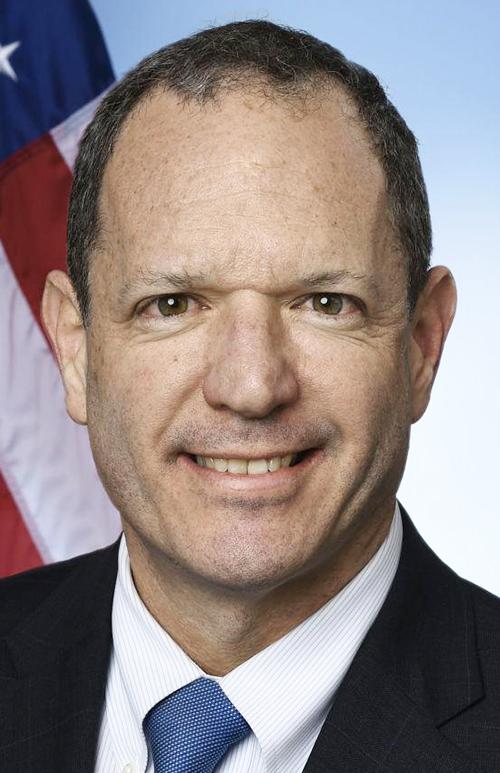
“Throughout the pandemic, we have seen trusted medical professionals orchestrate and carry out egregious crimes against their patients all for financial gain,” said Assistant Director Luis Quesada (above) of the FBI’s Criminal Investigative Division, in a DOJ press release. Clinical laboratory managers would be wise to monitor these Medicare fraud cases. (Photo copyright: Federal Bureau of Investigation.)
Nurse Practitioner Received Kickbacks and Bribes
Federal prosecutors alleged that the scheme involved telemarketing companies that contacted Medicare beneficiaries and persuaded them to request genetic tests and orthotic braces. Hernandez, they said, then signed pre-filled orders, “attesting that she had examined or treated the patients,” according to the DOJ news release.
In many cases, Hernandez had not even spoken with the patients, prosecutors said. “She then billed Medicare as though she were conducting complex office visits with these patients, and routinely billed more than 24 hours of ‘office visits’ in a single day,” according to the news release.
In total, Hernandez submitted fraudulent claims of approximately $119 million for genetic tests, the indictment stated. “In 2020, Hernandez ordered more cancer genetic (CGx) tests for Medicare beneficiaries than any other provider in the nation, including oncologists and geneticists,” according to the news release.
The indictment noted that because CGx tests do not diagnose cancer, Medicare covers them only “in limited circumstances, such as when a beneficiary had cancer and the beneficiary’s treating physician deemed such testing necessary for the beneficiary’s treatment of that cancer. Medicare did not cover CGx testing for beneficiaries who did not have cancer or lacked symptoms of cancer.”
In exchange for signing the orders, Hernandez received kickbacks and bribes from companies that claimed to be in the telemedicine business, the indictment stated.
“These healthcare fraud abuses erode the integrity and trust patients have with those in the healthcare industry … the FBI, working in coordination with our law enforcement partners, will continue to investigate and pursue those who exploit the integrity of the healthcare industry for profit,” said Assistant Director Luis Quesada of the Federal Bureau of Investigation’s Criminal Investigative Division, in the DOJ press release.
Conspirators Took Advantage of COVID-19 Pandemic
Prosecutors alleged that as part of the scheme, she and her co-conspirators took advantage of temporary amendments to rules involving telehealth services—changes that were enacted by Medicare in response to the COVID-19 pandemic.
The indictment noted that prior to the pandemic, Medicare covered expenses for telehealth services only if the beneficiary “was located in a rural or health professional shortage area,” and “was in a practitioner’s office or a specified medical facility—not at a beneficiary’s home.”
But in response to the pandemic, Medicare relaxed the restrictions to allow coverage “even if the beneficiary was not located in a rural area or a health professional shortage area, and even if the telehealth services were furnished to beneficiaries in their home.”
Hernandez was convicted of:
One count of conspiracy to commit healthcare fraud and wire fraud.
Four counts of healthcare fraud.
Three counts of making false statements.
Medscape noted that she was acquitted of two counts of healthcare fraud. The trial lasted six days, Medscape reported.
Hernandez’s sentencing hearing is scheduled for Dec. 14.
Co-Conspirators Plead Guilty
Two other co-conspirators in the case, Leonel Palatnik and Michael Stein, had previously pleaded guilty and received sentences, the Miami Herald reported.
Palatnik was co-owner of Panda Conservation Group LLC, which operated two genetic testing laboratories in Florida. Prosecutors said that Palatnik paid kickbacks to Stein, owner of 1523 Holdings LLC, “in exchange for his work arranging for telemedicine providers to authorize genetic testing orders for Panda’s laboratories,” according to a DOJ press release. The kickbacks were disguised as payments for information technology (IT) and consulting services.
“1523 Holdings then exploited temporary amendments to telehealth restrictions enacted during the pandemic by offering telehealth providers access to Medicare beneficiaries for whom they could bill consultations,” the press release states. “In exchange, these providers agreed to refer beneficiaries to Panda’s laboratories for expensive and medically unnecessary cancer and cardiovascular genetic testing.”
Palatnik pleaded guilty to his role in the kickback scheme in August 2021 and was sentenced to 82 months in prison, a DOJ press release states.
Stein pleaded guilty in April and was sentenced to five years in prison, the Miami Herald reported. He was also ordered to pay $63.3 million in restitution.
These federal cases involving clinical laboratory genetic testing and other tests and medical equipment indicate a commitment on the DOJ’s part to continue cracking down on healthcare fraud.
This is good news for clinical laboratories that already perform medical testing for telehealth providers and an opportunity for medical labs that do not, it is an opportunity to do so
Telemedicine visits have become commonplace since the arrival of COVID-19. Before the pandemic, telehealth was primarily used to give remote patients access to quality healthcare providers. But three years later both patients and physicians are becoming increasingly comfortable with virtual office visits, especially among Millennial and Gen Z patients and doctors.
Now, a recent study by the Perelman School of Medicine at the University of Pennsylvania (Penn Medicine) suggests that there could be a significant financial advantage for hospitals that conduct telemedicine. This would be a boon to clinical laboratories that perform medical testing for telemedicine providers.
According to Digital Health News, in July 2017 Penn Medicine launched a 24/7/365 copayment-free telemedicine program for its employees called Penn Medicine OnDemand. To engage with a telemedicine provider, patients must have a smartphone or tablet with a front-facing camera and updated operating system.
Telemedicine Visits Cost Less than In-Office Doctor Appointments
An analysis of the OnDemand program’s data collected from its inception through the end of 2019 found that the telemedicine appointment per-visit cost averaged around $380, whereas the cost of an in-person visit at an emergency department, primary care office, or urgent care clinic averaged around $493.
Typically, Penn Medicine’s employees used the telemedicine program for common, low risk health complaints. Healthcare conditions that many patients might otherwise not seek treatment for if an in-office visit was inconvenient.
“The data we analyzed pre-date the pandemic. It was a time when people were just putting a toe in the water and wondering, ‘Let me see if telemedicine could treat my needs,’” Krisda Chaiyachati MD, an internal medicine physician and Adjunct Assistant Professor at Penn Medicine, told Digital Health News. Chaiyachati lead the research team that conducted the telemedicine study.
“These days, people seem willing to jump in for an appropriate set of conditions,” he added. “The good news is that we made care easier while saving money, and we think the savings could be higher in the future.”
Chaiyachati and his colleagues found that telemedicine can save employers healthcare costs without sacrificing quality of care.
“The conditions most often handled by OnDemand are low acuity—non-urgent or semi-urgent issues like respiratory infections, sinus infections, and allergies—but incredibly common, so any kind of cost reduction can make a huge difference for controlling employee benefit costs,” Krisda Chaiyachati MD (above), a Penn Medicine physician and the study’s lead researcher, told Digital Health News. Clinical laboratories that already perform testing for telemedicine providers may see an increase in test orders once hospitals learn of the costs savings highlighted in the Penn Medicine study. (Photo copyright: Penn Medicine.)
Telemedicine on the Rise
The idea is not new. In late 2018, Planned Parenthood launched the Planned Parenthood Direct mobile app in New York State. The app provides New York patients with access to birth control, emergency contraception, and UTI treatment with no in-person visit required.
The program has since expanded across the country. Users of the app can connect with a physician to go over symptoms/needs, and the be sent a prescription within a business day to the pharmacy of their choice.
The concept is similar to Penn Medicine OnDemand, which gives patients 24/7 year around access to treatment for common and low-acuity medical issues in a convenient, virtual process.
Telemedicine was on the rise in other parts of the healthcare industry before the pandemic. According to “The State of Telehealth Before and After the COVID-19 Pandemic” published by Julia Shaver, MD, Kaiser Permanente, in the journal Primary Care: Clinics in Office Practice, 76% of US hospital systems had utilized some form of telemedicine by 2018. This rate grew exponentially while the healthcare system had to navigate a world with COVID-19 on the rise.
And, apparently, quality of care does not suffer when moved from in-person to virtual settings. Two studies conducted by The University of Rochester Medical Center (URMC) found telemedicine to be effective and that “common concerns about telemedicine don’t hold up to scrutiny,” according a news release.
In her New England Journal of Medicine (NEJM) paper on the studies, Kathleen Fear, PhD, URMC’s Director of Data Analytics, Health Lab, and her co-authors, wrote: “Three beliefs—that telemedicine will reduce access for the most vulnerable patients; that reimbursement parity will encourage overuse of telemedicine; and that telemedicine is an ineffective way to care for patients—have for years formed the backbone of opposition to the widespread adoption of telemedicine.”
However, URMC’s study found the opposite to be true. The NEJM authors wrote, “there is no support for these three common notions about telemedicine. At URMC, the most vulnerable patients had the highest uptake of telemedicine; not only did they complete a disproportionate share of telemedicine visits, but they also did so with lower no-show and cancellation rates. It is clear that … telemedicine makes medical care more accessible to patients who previously have experienced substantial barriers to care.
“Importantly, this access does not come at the expense of effectiveness. Providers do not order excessive amounts of additional testing to make up for the limitations of virtual visits. Patients do not end up in the ER or the hospital because their needs are not met during a telemedicine visit, and they also do not end up requiring additional in-person follow-up visits to supplement their telemedicine visit,” the NEJM authors concluded.
“Not only did our most vulnerable patients not get left behind—they were among those engaging the most with, and benefiting the most from, telemedicine services. We did not see worse outcomes or increased costs, or patients needing an increased amount of in-person follow up. Nor did we find evidence of overuse. This is good care, and it is equitable care for vulnerable populations,” Fear said in the news release.
“For patients, the message is clear and reassuring: Telemedicine is an effective and efficient way of receiving many kinds of healthcare,” she added.
Opportunities for Clinical Laboratories
Dark Daily has covered the fast growing world of telemedicine in many ebriefs over the years.
As telemedicine broadens its reach across the healthcare world, clinical laboratories and pathology groups would be wise to seek collaboration with health plans and providers of telemedicine to figure out where sample collection and testing fits into this new virtual healthcare space.
Loss could indicate an industrywide slowdown in digital health adoption and suggests medical laboratories will want to continue developing a virtual care strategy
Only two years after Teladoc Health (NYSE:TDOC) completed acquisition of Livongo, a data-based health coaching company, the virtual healthcare provider reported a 2022 net loss of $13.7 billion, a company press release announced.
The loss, which has been described as “historic,” is “mostly from a write-off related to the plummeting value of its Livongo acquisition. … By comparison, in 2021 [just a year earlier], Teladoc posted a net loss of $429 million,” Fierce Healthcare reported.
However, during Teladoc’s fourth quarter earnings call, CEO Jason Gorevic said, “We are pleased with the strong fourth quarter and full-year operating results. Despite a challenging macro environment, we were able to expand our product offerings and enhance the level of care delivered across our integrated whole-person platform.” Teladoc Health’s 2022 revenue was $2,406,840 compared to $2,032,707 in 2021. That’s an 18% increase over last year’s revenue, according to the earnings report. Nevertheless, a month before the earnings call Teladoc laid off 300 non-clinician employees, Fierce Healthcare noted.
“Teladoc Health has been at the forefront of the adoption curve, and we believe that our scale, breadth of product offering, and proven outcomes will enable us to maintain and expand our position in the market,” said Teladoc Health CEO Jason Gorevic during February’s earnings call. Clinical laboratory leaders may view the company’s $13B loss as indication that adoption in telehealth by physicians, healthcare providers, and patients of digital-based health services is not happening as swiftly has been predicted. (Photo copyright: The Business Journals.)
Predictions in Telehealth Adoption Fall Short
Teladoc Health, based in Purchase, New York, acquired Livongo of Mountain View, California, in October 2020 for $18.5 billion.
A news release at that time declared that the merger was “a transformational opportunity to improve the delivery, access, and experience of healthcare for consumers around the world.
“The highly complementary organizations,” the release stated, “will combine to create substantial value across the healthcare ecosystem, enabling clients everywhere to offer high quality, personalized, technology-enabled longitudinal care that improves outcomes and lowers costs across the full spectrum of health.”
The deal was hailed as advancing telemedicine and digital health services. As it turned out, though, the demand for those types of services fell far short of the Teladoc’s expectations. One way to interpret the cause of the multi-billion dollar write-down is that adoption of digital health services by physicians, healthcare providers, and consumers is not happening as fast as Teladoc projected.
It may also be that companies allocated too much money to deals during the COVID-19 pandemic, an unstable period of time for making major business decisions.
Teladoc to Reduce Costs while Pursuing Increased Adoption of Virtual Care
Gorevic told analysts during the earnings call that the company needs to reduce costs and reach a market that is “in the early innings.” Year-over-year growth of 6% to 11% is expected in 2023, he said.
“You should expect us to balance growth and margin with an increased focus on efficiency going forward. Part of that approach is rightsizing the cost structure to reflect the current growth rates of the business,” Gorevic said. “The more balanced approach does not mean that we will stop relentlessly pursing growth and increased adoption of virtual care across the industry. Virtual care’s role within the healthcare industry remains underpenetrated, and we will continue to invest to expand our leadership position,” he added.
Digital Health Investing Falls Off
However, citing digital health market data in the new CB Insights report, Becker’s Hospital Review(Becker’s) suggested the digital health bubble may have “popped,” and that funding by investors is falling fast from the “Golden Age” of 2021.
The digital health category grew by 79% in 2021 to $57.2 billion, a record high, according to data cited by Becker’s. In the fourth quarter of 2021, there were 13 new digital health companies with valuations of at least $1 billion each. But by the end of 2022, digital health funding dropped to $3.4 billion. That’s “a five-year low,” Becker’s reported.
“The drop in funding in digital health companies I feel is a response to the volatility in healthcare where over 50% of hospitals and healthcare providers have posted losses for 2022 and a bleak outlook for 2023,” Darrell Bodnar, Chief Information Officer at North Country Healthcare in Lancaster, New Hampshire, told Becker’s.
And, in a statement about hospitals’ financial health, Fitch Ratings said providers in 2022 reported “weaker profitability and liquidity” as compared to 2021. For most providers, a “rapid financial recovery” is not expected, Fitch noted.
Labs Need Telehealth Strategies
All of this uncertainty in the telehealth/virtual care markets may ultimately benefit clinical laboratories and lab investors who delayed investing in technology that enables supporting physicians and patients using telemedicine visits. Still, it would be smart for medical laboratory leaders to develop a digital health strategy to meet consumer demand for lab testing services in tandem with virtual care visits with healthcare providers.
Regulators and lawmakers are considering proposed changes to CLIA and PAMA involving medical laboratory services
Clinical laboratories and pathology groups should monitor a series of federal regulatory developments underway this fall. The proposals and documents will potentially affect how lab managers and staff do their jobs and how much Medicare reimbursement medical laboratories receive for certain diagnostic tests next year.
Among the initiatives under consideration are the following:
Below are details about these laboratory-related federal bills and regulatory documents that observant laboratory managers will want to track in the coming months.
“Clinical laboratories need to make sure that they have proper requisitions and documentation for genetic testing that involves telemedicine.” Danielle Tangorre, JD (above), a partner at law firm Robinson and Cole LLP in Albany, NY, told Dark Daily. (Photo copyright: Robinson and Cole LLP.)
CLIA Fee Increases and Testing Personnel Changes
The federal Centers for Medicare and Medicaid Services (CMS) is examining fee and personnel changes for CLIA. Officials from CMS are reviewing public comments on the proposal ahead of publishing a final rule.
Among other changes, the proposal would:
Institute a 20% across-the-board increase on existing fees.
Establish a biennial increase of CLIA fees for follow-up surveys, substantiated complaint surveys, and revised certificates.
Add doctoral, master’s, and bachelor’s degrees in nursing to qualify testing personnel for high and moderate complexity testing.
“The Practitioner does not have sufficient contact with or information from the purported patient to meaningfully assess the medical necessity of the items or services ordered or prescribed.
“The Telemedicine Company compensates the Practitioner based on the volume of items or services ordered or prescribed, which may be characterized to the Practitioner as compensation based on the number of purported medical records that the Practitioner reviewed.
“The Telemedicine Company only furnishes items and services to Federal health care program beneficiaries and does not accept insurance from any other payor.
“The Telemedicine Company does not expect Practitioners (or another Practitioner) to follow up with purported patients nor does it provide Practitioners with the information required to follow up with purported patients (e.g., the Telemedicine Company does not require Practitioners to discuss genetic testing results with each purported patient).”
And more.
“In the telehealth space, the issue the OIG has flagged is that genetic tests are being ordered without patient interaction or with only brief telephonic conversations,” Danielle Tangorre, JD, a partner at law firm Robinson & Cole LLP in Albany, N.Y., told Dark Daily.
New Bill May Eliminate 2023 Medical Laboratory Payment Cuts Under PAMA
Medical labs and pathology groups face payment cuts of up to 15% for 800 lab tests on the Medicare Clinical Lab Fee Schedule (CLFS) on Jan. 1, 2023, as part of PAMA.
The bill proposes to move regulatory oversight of LDTs from CLIA to the federal Food and Drug Administration (FDA). Champions of the bill argue that FDA regulation is needed for in vitro clinical tests (IVCTs) because they are similar to medical devices and bring with them patient safety concerns.
The bill seemed ready for a Senate vote over the summer but stalled. On Sept. 30, Congress passed a short-term resolution to keep the federal government funded. During negotiation, the VALID Act was removed from the larger spending package, according to Boston law firm Ropes and Gray.
Expect discussion to renew in Congress about the VALID Act after the mid-term elections.
Clinical laboratory leaders and pathology group managers will want to closely monitor the progress of these four federal legislative and regulatory developments. Each of the possible actions described above would significantly change the status quo in the compliance requirements and reimbursement arrangements for both clinical laboratory testing and anatomic pathology services.
Clinical laboratory managers and pathology group leaders may want to pay closer attention to shrinking hospital margins and whether this may put pressure on hospital laboratory budgets
Financial performance of the nation’s hospitals and health systems continues to disappoint hospital leaders. For the fourth consecutive month this year, hospital operating margins have remained in the red. This will, of course, affect the clinical laboratories and pathology departments at these institutions.
A recently released National Hospital Flash Report from healthcare management consulting firm Kaufman Hall indicates that 2022 has started off poorly for most healthcare organizations. The information in Kaufman’s report is based on data gathered from more than 900 hospitals and healthcare systems across the country.
The key takeaways outlined in the report for the month of April that are negatively affecting hospitals’ bottom lines include:
More patients are utilizing urgent care facilities, telemedicine options, and primary care providers instead of seeking care at hospital emergency departments.
Patients tend to be sicker, more expensive to treat, and require longer hospital stays compared to April of 2021.
Expenses remain high due to labor shortages, specialty supplies, supply chain issues, and costly pharmaceuticals.
“Labor shortages, high prices for supplies, and cost increases to treat sicker patients over longer stays are ballooning hospital expenses,” Erik Swanson (above), Senior Vice President of Data and Analytics for Kaufman Hall, told Fierce Healthcare. “With a bleak consensus outlook for the US economy, those factors and their effects could be here for a while.” Clinical laboratories have been grappling with supply and personnel shortages and rising costs for many years. (Photo copyright: Kaufman Hall.)
According to the report, the operating margins for the hospitals were down nearly 40% compared to March 2022 and declined 76% when compared to April 2021. The calculated median operating margin index was -3.09% throughout April 2022. In addition, operating earnings declined almost 27% from March to April of this year and 51.5% when contrasted with April of last year.
The report also found that patient volumes, average lengths of stays, and surgeries performed had declined overall during the month of April—but that hospital expenses rose during that period—thus decreasing profit margins. Total expenditures increased by 8.3% over April 2021, and 9.6% between March and April of this year.
Inflation, COVID-19 Key Factors in Hospitals’ First Quarter Losses
The report noted that the historic rise in inflation during the month of April is fueling negative revenues for healthcare systems and hospitals. Several for-profit and nonprofit hospital systems reported losses for the first quarter of 2022.
Kaufman’s report for the month of March was slightly more positive as the healthcare organizations surveyed reported an incremental rise in patient volumes and minor expense relief, resulting in gains in volumes and revenues. March also saw an increase in outpatient and surgery volumes and lower numbers of high-acuity patients. However, that slight upward trend did not last through April.
Another reason for the year-to-date unsatisfactory revenue margins for hospitals across the country was the surge of patients seeking care for the SARS-CoV-2 omicron variant of the COVID-19 infection earlier in the year.
“The first few months of this year were decimated by the impact of the omicron wave, but as the omicron wave subsided, we had a bit of a rebound in those volumes, and that’s what you saw in March,” Erik Swanson, Senior Vice President of Data and Analytics for Kaufman Hall told HealthLeaders. “However, it wasn’t a rebound to the full historical volumes, and that is again because of that wave.”
Healthcare Organizations are Advised to Look at Expenses
The National Hospital Flash Report is published monthly by Kaufman Hall and provides vital analyses and observations on the fiscal performance of hospitals and healthcare systems. The information contained in the report includes data on margins, volumes, revenues, and expenses.
“The revenue side is a bit more challenging for organizations to control. Many are looking at their internal revenue cycle, understanding where there can be improvements in their own process, improving just the performance of the revenue cycle that improves the collections rates,” Swanson said. “Many are also trying to renegotiate with payers and negotiate perhaps as aggressively as possible to get the best rates. But I think where you see much of the levers that organizations can pull is on the expense side.”
Fluctuations in revenue mean that organizations—including clinical laboratories—will have to establish new strategies to diminish their financial shortfalls.
“Finally, because a lot of these challenges are due to these ebbs and flows in volumes, many organizations are also looking to see how they can embrace more data-driven predictive type models to look at volumes and think about how they can optimize their workforce to better handle these ebbs and flows of volume,” Swanson added. “This very often includes thinking about the appropriate size of float pools, the number of times that you need to pay overtime versus hiring new individuals, so many organizations are taking those approaches to bend the cost curve. There are quite a few levers that organizations are pulling to bend this cost curve down to ultimately improve their margins overall.”
The most recent report concluded that the first four months of 2022 have been extremely challenging for hospitals and health systems with extended negative margins taking their toll. The report also projected that the overall picture does not look favorable for these organizations for the remainder of the year and that many healthcare facilities may finish out 2022 with substantially depressed margins.
Clinical laboratory managers and pathology group leaders serving hospital and integrated delivery networks (IDNs) may want to consider how these depressed hospital margins will affect their own laboratories. It may be timely to anticipate how this fall’s budget-planning cycle might require their labs to specify how costs can be cut in the coming budget year.