Research could lead to new biomarkers for clinical laboratory tests that spot disease early in patients
As we have covered in previous Dark Daily ebriefs, there are ongoing efforts to develop diagnostic assays that use human breath as the specimen. One early example was the breath specimen for Helicobacter pylori (H. pylori) testing—the bacteria that causes peptic ulcers—in the 1990s. Thus, a new sensor developed by scientists at Zhejiang University in China that can detect the presence of lung cancer in human breath will be of interest to medical laboratory scientists and clinical laboratories working on such testing.
In a proof-of-concept study, the Zhejiang University researchers “developed ultrasensitive nanoscale sensors that in small-scale tests distinguished a key change in the chemistry of the breath of people with lung cancer,” according to an American Chemical Society (ACS) news release.
The new research exemplifies how instruments are becoming increasingly sensitive to detection of smaller specimen quantities, making it possible to even use exhaled breath to diagnose lung cancer, noted a review article published in Science Direct.
“This study presents a novel Pt@InNiOx [platinum (Pt), indium (In), nickel (Ni)] nanoflake isoprene sensor that achieves an exceptionally low limit of detection at two parts per billion (2ppb)—the lowest reported for isoprene sensor to date,” wrote study lead author, Pingwei Liu, PhD (above), distinguished research fellow, Zhejiang University, et al, in ACS Sensors. “Our work not only provides a breakthrough in low-cost, noninvasive cancer screening through breath analysis but also advances the rational design of cutting-edge gas sensing materials.” Clinical laboratories working with breath sample biomarkers will be intrigued by this new advancement in the technology. (Photo copyright: Zhejiang University.)
Finding the Breakthrough Sensor
The Zhejiang University researchers were motivated by the potential for rapid gas sensing in diagnostics. Many gases, including carbon dioxide, are exhaled. But one particular gas, isoprene, they found “can indicate the presence of lung cancer,” the news release states.
However, while breath is readily available, it is not easy to isolate breath biomarkers. That is because a detector needs to “differentiate between volatile chemicals, withstand the natural humidity of exhaled breath, and detect tiny quantities of specific chemicals,” New Atlas explained.
To detect small specimen quantities of isoprene, a highly sensitive sensor needed to be developed—one that would be a step up from standard indium oxide-based breath sensors.
The scientists experimented with a series of indium (III) oxide (In203)-based nanoflake sensors until they found the sensor that performed consistently in nine experiments. They called it Pt@InNiOx for the platinum (Pt), indium (In), and nickel (Ni) it contained.
According to the news release, the Pt@InNiOx sensor:
Had “sensitivity that far surpassed earlier sensors” as evidenced by detection of isoprene as low as 2ppb.
Emphasized isoprene attraction over other volatile compounds in breath.
Has advanced sensitivity due to “Pt nanoclusters uniformly anchored on the nanoflakes” activating the isoprene sensing.
Gadget Review described the innovation as a “significant advance in diagnostic capability” that uses nanoscale technology along with “indium oxide nanoflakes with platinum-based nanoclusters.”
Developing the Lung Cancer Diagnostic Device
The scientists put their Pt@InNiOx nanoflakes into a portable sensing device for breath analysis. They then inserted breath samples from 13 people including five who had lung cancer. They found that:
In samples from people with cancer, the device enabled detection of isoprene levels lower than 40 ppb.
In samples from cancer-free participants, the device found isoprene levels more than 60 ppb.
“We integrate these ultrasensitive Pt@InNiOx nanoflakes into a miniaturized portable electronic device that successfully distinguishes lung cancer patients with expiratory isoprene below 40ppb, from the healthy population with isoprene above 60 ppb, enabling an accurate diagnosis in clinics,” wrote study lead author, Pingwei Liu, PhD, distinguished research fellow, Zhejiang University, et al, in ACS Sensors.
“As the isoprene hits the nanoflakes, electron release is sparked in a way that can be measured,” MSN Health reported, adding that the nanoflakes were also able to find isoprene in other chemicals and operate even in humid conditions.
Breath as Lab Test Biomarker for Cancer
In the United States, more people die from lung cancer than any other form of cancer, according to US Centers for Disease Control and Prevention statistics. The CDC data show there were 209,500 new lung and bronchus cancer cases in 2022, the most recent year for available data.
The Zhejiang University scientists reportedly plan to continue their research on the sensing materials and link between isoprene and lung cancer.
Studies continue to show many components in human breath can be used as clinical laboratory test biomarkers. Assays that use the breath as specimen may one day play an important role in early diagnosis of lung cancer and other diseases.
New gene-editing systems could provide markedly improved accuracy for DNA and RNA editing leading to new precision medicine tools and genetic therapies
In what may turn out to be a significant development in genetic engineering, researchers from three institutions have identified nearly 200 new systems that can be used for editing genes. It is believed that a number of these new systems can provide comparable or better accuracy when compared to CRISPER (Clustered Regularly Interspaced Short Palindromic Repeats), currently the most-used gene editing method.
CRISPR-Cas9 has been the standard tool for CRISPR gene editing and genetic engineering. However, publication of these new research findings are expected to give scientists better, more precise tools to edit genes. In turn, these developments could lead to new clinical laboratory tests and precision medicine therapies for patients with inherited genetic diseases.
“Best known as a powerful gene-editing tool, CRISPR actually comes from an inbuilt defense system found in bacteria and simple microbes called archaea. CRISPR systems include pairs of ‘molecular scissors’ called Cas enzymes, which allow microbes to cut up the DNA of viruses that attack them. CRISPR technology takes advantage of these scissors to cut genes out of DNA and paste new genes in,” according to Live Science.
In its article, New Atlas noted that the researchers looked to bacteria because “In nature, CRISPR is a self-defense tool used by bacteria.” They developed an algorithm—called FLSHclust—to conduct “a deep dive into three databases of bacteria, found in environments as diverse as Antarctic lakes, breweries, and dog saliva.”
In their paper, the researchers wrote, “We developed fast locality-sensitive hashing–based clustering (FLSHclust), a parallelized, deep clustering algorithm with linearithmic scaling based on locality-sensitive hashing. FLSHclust approaches MMseqs2, a gold-standard quadratic-scaling algorithm, in clustering performance. We applied FLSHclust in a sensitive CRISPR discovery pipeline and identified 188 previously unreported CRISPR-associated systems, including many rare systems.”
“In lab tests [the newfound CRISPR systems] demonstrated a range of functions, and fell into both known and brand new categories,” New Atlas reported.
“Some of these microbial systems were exclusively found in water from coal mines,” Soumya Kannan, PhD (above), a Graduate Fellow at MIT’s Zhang Lab and co-first author of the study, told New Atlas. “If someone hadn’t been interested in that, we may never have seen those systems.” These new gene-editing systems could lead to new clinical laboratory genetic tests and therapeutics for chronic diseases. (Photo copyright: MIT McGovern Institute.)
Deeper Look at Advancement
The CRISPR-Cas9 made a terrific impact when it was announced in 2012, earning a Nobel Prize in Chemistry.
Though CRISPR-Cas9 brought huge benefits to genetic research, the team noted in their Science paper that “existing methods for sequence mining lag behind the exponentially growing databases that now contain billions of proteins, which restricts the discovery of rare protein families and associations.
“We sought to comprehensively enumerate CRISPR-linked gene modules in all existing publicly available sequencing data,” the scientist continued. “Recently, several previously unknown biochemical activities have been linked to programmable nucleic acid recognition by CRISPR systems, including transposition and protease activity. We reasoned that many more diverse enzymatic activities may be associated with CRISPR systems, many of which could be of low abundance in existing [gene] sequence databases.”
Among the previously unknown gene-editing systems the researchers found were some belonging to the Type 1 CRISPR systems class. These “have longer guide RNA sequences than Cas9. They can be directed to their targets more precisely, reducing the risk of off-target edits—one of the main problems with CRISPR gene editing,” New Atlas reported.
“The authors also identified a CRISPR-Cas enzyme, Cas14, which cuts RNA precisely. These discoveries may help to further improve DNA- and RNA-editing technologies, with wide-ranging applications in medicine and biotechnology,” the Science paper noted.
Testing also showed these systems were able to edit human cells, meaning “their size should allow them to be delivered in the same packages currently used for CRISPR-Cas9,” New Atlas added.
Another newfound gene-editing system demonstrated “collateral activity, breaking down nucleic acids after binding to the target, New Atlas reported. SHERLOCK, a tool used to diagnose single samples of RNA or DNA to diagnose disease, previously utilized this system.
Additionally, New Atlas noted, “a type VII system was found to target RNA, which could unlock a range of new tools through RNA editing. Others could be adapted to record when certain genes are expressed, or as sensors for activity in cells.”
Looking Ahead
The strides in science from the CRISPR-Cas9 give a hint at what can come from the new discovery. “Not only does this study greatly expand the field of possible gene editing tools, but it shows that exploring microbial ecosystems in obscure environments could pay off with potential human benefits,” New Atlas noted.
“This study introduces FLSHclust as a tool to cluster millions of sequences quickly and efficiently, with broad applications in mining large sequence databases. The CRISPR-linked systems that we discovered represent an untapped trove of diverse biochemical activities linked to RNA-guided mechanisms, with great potential for development as biotechnologies,” the researchers wrote in Science.
How these newfound gene-editing tools and the new FLSHclust algorithm will eventually lead to new clinical laboratory tests and precision medicine diagnostics is not yet clear. But the discoveries will certainly improve DNA/RNA editing, and that may eventually lead to new clinical and biomedical applications.
Skin patch technologies could enable clinical laboratories to monitor patients’ vitals and report to medical professionals in real time
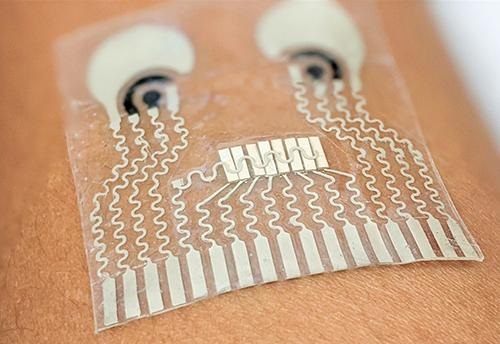
Pathologists and clinical laboratory leaders have read many Dark Daily ebriefings on the development of skin patches over the years that do everything from monitoring fatigue in the military to being a complete lab-on-skin technology. Now, researchers at the University of California San Diego (UCSD) have developed a wearable patch that can monitor cardiovascular signals and other various biochemical levels in the body simultaneously.
The researchers believe there is enormous potential for such a patch in helping patients monitor conditions such as hypertension or diabetes. They also foresee a scenario where the patch could be used in settings where vitals must be constantly monitored. They hope to develop future versions of the patch that can detect more biomarkers within the body.
“This type of wearable would be very helpful for people with underlying medical conditions to monitor their own health on a regular basis,” Lu Yin, a PhD student and co-first author of the study, told New Atlas. “It would also serve as a great tool for remote patient monitoring, especially during the COVID-19 pandemic when people are minimizing in-person visits to the clinic,” she added.
Combining Precision Medicine with Telehealth and the Internet of Things
About the size of a postage stamp and consisting of stretchy polymers that conform to the skin, the UCSD patch monitors blood pressure and contains sensors that measure different biochemical levels in the body, such as:
The sensors are carefully arranged on the patch to eliminate interference between the signals, noted a UCSD press release.
In their published research, the UCSD researchers wrote of their new skin patch monitoring device, “Intertwined with concepts of telehealth, the internet of medical things, and precision medicine, wearable sensors offer features to actively and remotely monitor physiological parameters. Wearable sensors can generate data continuously without causing any discomfort or interruptions to daily activity, thus enhancing the self-monitoring compliance of the wearer, and improving the quality of patient care.” (Photo copyright: University of California San Diego.)
“Each sensor provides a separate picture of a physical or chemical change. Integrating them all in one wearable patch allows us to stitch those different pictures together to get a more comprehensive overview of what’s going on in our bodies,” said Sheng Xu, PhD, Principle Investigator, Xu Research Group at UCSD, Assistant Professor in the Department of NanoEngineering Department, and a co-first author of the study, in the press release.
The UCSD researchers developed their skin patch to monitor specific biomarkers that can affect blood pressure.
“Let’s say you are monitoring your blood pressure and you see spikes during the day and think that something is wrong,” co-first author Juliane Sempionatto, PhD, a postdoctoral researcher at California Institute of Technology (Caltech) and co-first author of the study, told New Atlas. “But a biomarker reading could tell you if those spikes were due to an intake of alcohol or caffeine. This combination of sensors can give you that type of information,” she added.
The blood pressure sensor sits near the center of the patch and consists of a set of small transducers welded to the patch via a conductive link. Voltage applied to the transducers send ultrasound waves through the body which bounce off arteries and create echoes that are detected by the sensor and converted into an accurate blood pressure reading.
The chemical sensor releases the drug pilocarpine into the skin to induce sweat and then measures the chemicals contained in the sweat to provide readings of certain biochemical levels.
The glucose sensor located in the patch emits a mild electrical current to the body that stimulates the release of interstitial fluid and then reads the glucose level in that fluid.
“The novelty here is that we take completely different sensors and merge them together on a single small platform as small as a stamp,” Joseph Wang, D.Sc, SAIC Endowed Chair, Distinguished Professor of NanoEngineering, Director of the Center for Wearable Sensors at UCSD, and co-author of the study told New Atlas. “We can collect so much information with this one wearable and do so in a non-invasive way, without causing discomfort or interruptions to daily activity.” (Photo copyright: University of Southern California San Diego.)
Skin Patch Measurements Closely Match Those of Traditional Devices
Test subjects wore the patch on their neck while performing various combinations of the following tasks:
exercising on a stationary bicycle,
eating a high-sugar meal,
drinking an alcoholic beverage, and
drinking a caffeinated beverage.
The results of the measurements taken from the patch closely matched measurements collected by traditional monitoring devices such as a:
For now, the patch must be connected to an external power source which transmits the reading to a counter-top machine, but the researchers hope to create a wireless version in the future.
“There are opportunities to monitor other biomarkers associated with various diseases,” Sempionatto said in the UCSD press release. “We are looking to add more clinical value to this device.”
Other Similar Skin Patch Monitoring Technologies
Though an important breakthrough, the UCSD’s device is not the first skin patch monitor to be developed.
Multiple research and clinical studies are underway that hope to prove the accuracy and safety of wearable devices at detecting and monitoring certain health conditions. It’s a worthy goal.
Skin patches, such as the one created at UCSD, could enable clinical laboratories to provide value-added service to medical professionals and patients alike. Medical labs could potentially monitor skin patch readings in real-time and notify physicians and patients of changes in biomarkers that require attention.
Further, as this technology is developed, it will likely find a ready market with the latest generation of consumers who are more willing than previous generations to buy their own diagnostic tests for home use. These “next-generation” healthcare consumers have demonstrated their willingness to use Apple watches, Fitbits, and similar wearable devices to monitor their condition during exercise and other health metrics.
Pathologists and clinical laboratory managers should not overlook the potential for robust consumer demand to accelerate development and market adoption of such skin patches.