


What Key Laboratory Leaders Will Learn at This Week’s 2023 Executive War College on Diagnostics, Clinical Laboratory, and Pathology Management
Executives and pathologists from many of the nation’s most prominent clinical laboratories are on their way to the Crescent City today to share best practices, hear case studies from innovative labs, and network
NEW ORLEANS—This afternoon, more than 900 lab CEOs, administrators, and pathologists will convene for the 28th Annual Executive War College on Diagnostics, Clinical Laboratory, and Pathology Management conference. Three topics of great interest will center around adequate lab staffing, effective cost management, and developing new sources of lab testing revenue.
Important sessions will also address the explosion in next-generation sequencing and genetic testing, proposed FDA regulation of laboratory-developed tests (LDTs), and innovative ways that clinical laboratories and pathology groups can add value and be paid for that additional value.
All this is happening amidst important changes to healthcare and medicine in the United States. “Today, the US healthcare system is transforming itself at a steady pace,” explained Robert L. Michel, Editor-in-Chief of The Dark Report and Founder of the Executive War College. “Big multi-hospital health systems are merging with each other, and payers are slashing reimbursement for many medical lab tests, even as healthcare consumers want direct access to clinical laboratory tests and the full record of their lab test history.
“Each of these developments has major implications in how clinical laboratories serve their parent organizations, offer services directly to consumers, and negotiate with payers for fair reimbursement as in-network providers,” Michel added. “Attending the Executive War College on Diagnostics, Clinical Laboratory, and Pathology Management equips lab leaders with the tools they’ll need to make smart decisions during these challenging times.”
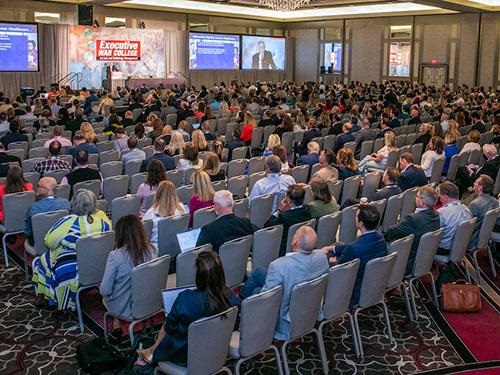
Now in its 28th year, the Executive War College on Diagnostics, Clinical Laboratory, and Pathology Management convenes April 25-26 in New Orleans. Executive War College extends to a third day with three full-day workshops: LEAN fundamentals for lab leaders, a genetic testing program track, and a digital pathology track. Learn more at www.ExecutiveWarCollege.com. (Photo copyright: The Dark Intelligence Group.)
Challenges and Opportunities for Clinical Laboratories
With major changes unfolding in the delivery and reimbursement of clinical services, clinical laboratory and pathology practice leaders need effective ways to respond to the evolving needs of physicians, patients, and payers. As The Dark Report has often covered, three overlapping areas are a source of tension and financial pressure for labs:
- Day-to-day pressures to manage costs in the clinical laboratory or pathology practice.
- The growing demand for genetic testing, accompanied by reimbursement challenges.
- Evolving consumer expectations in how they receive medical care and interact with providers.
Addressing all three issues and much more, the 2023 Executive War College on Diagnostics, Clinical Laboratory, and Pathology Management features more than 80 sessions with up to 125 lab managers, consultants, vendors, and in vitro diagnostic (IVD) experts as speakers and panelists.
Old-School Lab Rules Have Evolved into New-School Lab Rules
Tuesday’s keynote general sessions (to be reported exclusively in Wednesday’s Dark Daily ebriefing) will include four points of interest for clinical laboratory and pathology leaders who are managing change and pursuing new opportunities:
- Positioning the lab to prosper by serving healthcare’s new consumers, new care models, new payment models, and more, with Michel at the podium.
- How old-school lab rules have evolved into new-school lab rules and ways to transition the lab through today’s disrupters in healthcare and the clinical laboratory marketplace, with Stan Schofield, Managing Principal of the Compass Group.
- The growing trend of clinical laboratory-pharmacy relationships with David Pope, PharmD, CDE, Chief Pharmacy Officer at OmniSYS, XIFIN Pharmacy Solutions.
- Generating value by identifying risk signals in longitudinal lab data and opportunities in big data from payers, physicians, pharma, and bioresearch, with Brad Bostic, Chairman and CEO of hc1.
Wednesday’s keynote sessions (see exclusive insights in Friday’s Dark Daily ebriefing) explore:
- The lab’s role to support precision medicine, serve the new consumer, and create value from data to support improved patient care and save on cost of care, with William Morice, MD, PhD, CEO and President of Mayo Clinic Laboratories.
- Precision medicine in genetic test management lab benefits, with Cristi Radford, MS, CGC, Product Director at Optum, and Jason Bush, PhD, Executive Vice President of Product at Avalon Healthcare Solutions.
- How agribusiness technology helped create ultra-high throughput PCR testing during the COVID-19 pandemic and informed the path forward, featuring Dwayne Breining, MD, Director of Pathology and Laboratory Medicine at Northwell Health.
Wednesday’s keynotes conclude with a panel discussion on delivering value to physicians, patients, and payers with lab testing services.
Clinical Labs, Payers, and Health Plans Swamped by Genetic Test Claims
Attendees of the 2023 Executive War College on Diagnostics, Clinical Laboratory, and Pathology Management may notice a greater emphasis on whole genome sequencing and genetic testing this year.
As regular coverage and analysis in The Dark Report has pointed out, clinical laboratories, payers, and health plans face challenges with the explosion of genetic testing. Several Executive War College Master Classes will explore critical management issues of genetic and genomic testing, including laboratory benefit management programs, coverage decisions, payer relations, and best coding practices, as well as genetic test stewardship.
This year’s Executive War College also devotes a one-day intensive session on how community hospitals and local labs can set up and offer genetic tests and next-generation sequencing services. This third-day track features more than a dozen experts including:
- Honey Reddi, PhD, FACMG, Professor and Chief of the Division of Precision Medicine and Cytogenetics at the Medical College of Wisconsin.
- Laura J. Tafe, MD, President of the Association for Molecular Pathology (AMP) and Associate Professor of Pathology and Laboratory Medicine at Dartmouth Hitchcock Medical Center.
- Matthew Lebo, PhD, Director of Bioinformatics at Harvard Medical School.
During these sessions, attendees will be introduced to “dry labs” and “virtual CLIA labs.” These new terms differentiate the two organizations that process genetic data generated by “wet labs,” annotate it, and provide analysis and interpretation for referring physicians.
State of the Industry: Clinical Lab, Private Practice Pathology, Genetic Testing, IVD, and More
For lab consultants, executives, and directors interested in state-of-the-industry Q/A and discussions concerning commercial laboratories, private-practice pathology, and in vitro diagnostics companies, a range of breakout sessions, panels, and roundtables will cover:
- Action steps to protect pathologists’ income and boost practice revenue.
- Important developments in laboratory legal, regulatory, and compliance requirements.
- New developments in clinical laboratory certification and accreditation, including the most common deficiencies and how to reach “assessment ready” status.
- An update on the IVD industry and what’s working in today’s post-pandemic market for lab vendors and their customers.
- Federal government updates on issues of concern to clinical laboratories, including PAMA, the VALID Act, and more.
Long-time attendees will notice the inclusion of “Diagnostics” into the Executive War College moniker. It’s an important addition, Michel explained for Dark Daily.
“In the recent past, ‘clinical laboratory’ and ‘anatomic pathology’ were terms that sufficiently described the profession of laboratory medicine,” he noted. “However, a subtle but significant change has occurred in recent years. The term ‘diagnostics’ has become a common description for medical testing, along with other diagnostic areas such as radiology and imaging.”
Key managers of medical laboratories, pathology groups, and in vitro diagnostics have much to gain from attending the Executive War College on Diagnostics, Clinical Laboratory, and Pathology Management, now in its 28th year. Look for continued coverage through social media channels, at Dark Daily, and in The Dark Report.
Clinical laboratories are invited to continue the conversations by joining the Executive War College Discussion Group and The Dark Report Discussion Group on LinkedIn.
—Liz Carey
Related Information:
Executive War College on Diagnostics, Clinical Laboratory, and Pathology Management Agenda
Six Important Themes to Help Labs Succeed