Forces in play will directly impact the operations and financial stability of many of the nation’s clinical laboratories
With significant regulatory changes expected in the next 18 to 24 months, experts are predicting a “Perfect Storm” for managers of clinical laboratories and pathology practices.
Currently looming are changes to critical regulations in two regulatory areas that will affect hospitals and medical laboratories. One regulatory change is unfolding with the US Food and Drug Administration (FDA) and the other regulatory effort centers around efforts to update the Clinical Laboratory Improvement Amendments of 1988 (CLIA).
The major FDA changes involve the soon-to-be-published Final Rule on Laboratory Developed Tests (LDTs), which is currently causing its own individual storm within healthcare and will likely lead to lawsuits, according to the FDA Law Blog.
In a similar fashion—and being managed under the federal Centers for Medicare and Medicaid Services (CMS)—are the changes to CLIA rules that are expected to be the most significant since 2003.
The final element of the “Perfect Storm” of changes coming to the lab industry is the increased use by private payers of Z-Codes for genetic test claims.
In his general keynote, Robert L. Michel, Dark Daily’s Editor-in-Chief and creator of the 29th Executive War College on Diagnostics, Clinical Laboratory, and Pathology Management, will set the stage by introducing a session titled, “Regulatory Trifecta Coming Soon to All Labs! Anticipating the Federal LDT Rule, Revisions to CLIA Regulations, and Private Payers’ Z-Code Policies for Genetic Claims.”
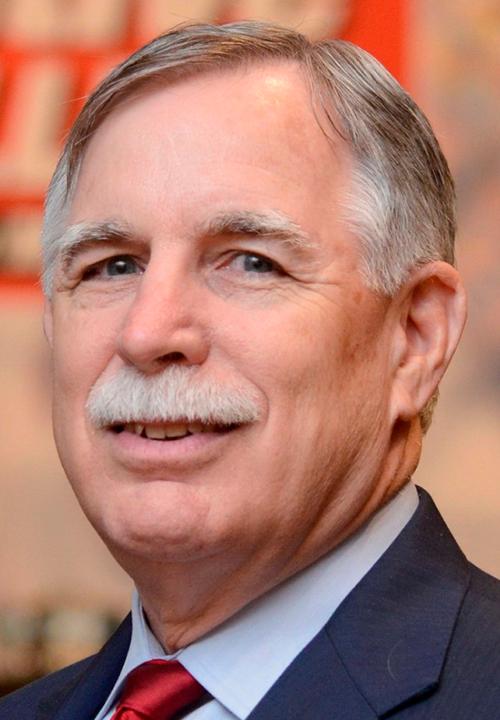
“There are an unprecedented set of regulatory challenges all smashing into each other and the time is now to start preparing for the coming storm,” says Robert L. Michel (above), Dark Daily’s Editor-in-Chief and creator of the 29th Executive War College on Diagnostics, Clinical Laboratory, and Pathology Management, a national conference on lab management taking place April 30-May 1, 2024, at the Hyatt in New Orleans. (Photo copyright: The Dark Intelligence Group.)
Coming Trifecta of Disruptive Forces to Clinical Laboratory, Anatomic Pathology
The upcoming changes, Michel notes, have the potential to cause major disruptions at hospitals and clinical laboratories nationwide.
“Importantly, this perfect storm—which I like to describe as a Trifecta because these three disruptive forces that will affect how labs will conduct business—is not yet on the radar screen of most lab administrators, executives, and pathologists,” he says.
Because of that, several sessions at this year’s Executive War College conference, now in its 29th year, will offer information designed to give attendees a better understanding of how to manage what’s coming for their labs and anatomic pathology practices.
“This regulatory trifecta consists of three elements,” adds Michel, who is also Editor-in-Chief of Dark Daily’s sister publication The Dark Report, a business intelligence service for senior level executives in the clinical laboratory and pathology industry, as well in companies that offer solutions to labs and pathology groups.
According to Michel, that trifecta includes the following:
Element 1
FDA’s Draft LDT Rule
FDA’s LDT rule is currently the headline story in the lab industry. Speaking about this development and two other FDA initiatives involving diagnostics at the upcoming Executive War College will be pathologist Tim Stenzel, MD, PhD, former director of the FDA’s Office of In Vitro Diagnostics. It’s expected that the final rule on LDTs could be published by the end of April.
Stenzel will also discuss harmonization of ISO 13485 Medical Devices and the FDA’s recent memo on reclassifying most high-risk in vitro diagnostics to moderate-risk to ease the regulatory burden on companies seeking agency review of their diagnostic assays.
Salerno will also cover the CDC’s efforts to foster closer connections with clinical labs and their local public health laboratories, as well as the expanding menu of services for labs that his department now offers.
Element 3
Private Payer Use of Z-Codes for Test Claims
On the third development—increased use by private payers of Z-Codes for genetic test claims—the speaker will be pathologist Gabriel Bien-Willner, MD, PhD. He is the Medical Director of the MolDX program at Palmetto GBA, a Medicare Administrative Contractor (MAC). It is the MolDX program that oversees the issuance of Z-Codes for molecular and diagnostic tests.
UnitedHealthcare (UHC) was first to issue such a Z-Code policy last year, although it has delayed implementation several times. Other major payers are watching to see if UHC succeeds with this requirement, Michel says.
Other Critical Topics to be Covered at EWC
In addition to these need-to-know regulatory topics, Michel says that this year’s Executive War College will present almost 100 sessions and include 148 speakers. Some of the other topics on the agenda in New Orleans include the following and more:
Standardizing automation, analyzers, and tests across 25 lab sites.
Effective ways to attract, hire, and retain top-performing pathologists.
Leveraging your lab’s managed care contracts to increase covered tests.
“Our agenda is filled with the topics that are critically important to senior managers when it comes to managing their labs and anatomic pathology practices,” Michel notes.
“Every laboratory in the United States should recognize these three powerful developments are all in play at the same time and each will have direct impact on the clinical and financial performance of our nation’s labs,” Michel says. “For that reason, every lab should have one or more of their leadership team present at this year’s Executive War College to understand the implications of these developments.”
Visit here to learn more about the 29th Executive War College conference taking place in New Orleans.
The speakers also noted that labs must learn to work collaboratively with payers—perhaps through health information technology (HIT)—to establish best practices that improve reimbursements on claims for novel genetic tests.
Harnessing the ever-increasing volume of diagnostic data that genetic testing produces should be a high priority for labs, said William Morice II, MD, PhD, CEO and President of Mayo Clinic Laboratories.
“There will be an increased focus on getting information within the laboratory … for areas such as genomics and proteomics,” Morice told the keynote audience at the Executive War College on Wednesday.
“Wearable technology data is analyzed using machine learning. Clinical laboratories must participate in analyzing that spectrum of diagnostics,” said William Morice II, MD, PhD (above), CEO and President of Mayo Clinic Laboratories. Morice spoke during this week’s Executive War College.
Precision Medicine Efforts Include Genetic Testing and Wearable Devices
For laboratories new to genetic testing that want to move it in-house, Morice outlined effective first steps to take, including the following:
Determine and then analyze the volume of genetic testing that a lab is sending out.
Research and evaluate genetic sequencing platforms that are on the market, with an eye towards affordable cloud-based options.
Build a business case to conduct genetic tests in-house that focuses on the long-term value to patients and how that could also improve revenue.
A related area for clinical laboratories and pathology practices to explore is their role in how clinicians treat patients using wearable technology.
For example, according to Morice, Mayo Clinic has monitored 20,000 cardiac patients with wearable devices. The data from the wearable devices—which includes diagnostic information—is analyzed using machine learning, a subset of artificial intelligence.
In one study published in Scientific Reports, scientists from Mayo’s Departments of Neurology and Biomedical Engineering found “clear evidence that direct seizure forecasts are possible using wearable devices in the ambulatory setting for many patients with epilepsy.”
Clinical laboratories fit into this picture, Morice explained. For example, depending on what data it provides, a wearable device on a patient with worsening neurological symptoms could trigger a lab test for Alzheimer’s disease or other neurological disorders.
“This will change how labs think about access to care,” he noted.
For Payers, Navigating Genetic Testing Claims is Difficult
While there is promise in genetic testing and precision medicine, from an administrative viewpoint, these activities can be challenging for payers when it comes to verifying reimbursement claims.
“One of the biggest challenges we face is determining what test is being ordered. From the perspective of the reimbursement process, it’s not always clear,” said Cristi Radford, MS, CGC, Product Director at healthcare services provider Optum, a subsidiary of UnitedHealth Group, located in Eden Prairie, Minnesota. Radford also presented a keynote at this year’s Executive War College.
Approximately 400 Current Procedural Terminology (CPT) codes are in place to represent the estimated 175,000 genetic tests on the market, Radford noted. That creates a dilemma for labs and payers in assigning codes to novel genetic tests.
During her keynote address, Radford showed the audience of laboratory executives a slide that charted how four labs submitted claims for the same high-risk breast cancer panel. CPT code choices varied greatly.
“Does the payer have any idea which test was ordered? No,” she said. “It was a genetic panel, but the information doesn’t give us the specificity payers need.”
In such situations, payers resort to prior authorization to halt these types of claims on the front end so that more diagnostic information can be provided.
“Plans don’t like prior authorization, but it’s a necessary evil,” said Jason Bush, PhD, Executive Vice President of Product at Avalon Healthcare Solutions in Tampa, Florida. Bush co-presented with Radford.
[Editor’s note: Dark Daily offers a free webinar, “Learning from Payer Behavior to Increase Appeal Success,” that teaches labs how to better understand payer behavior. The webinar features recent trends in denials and appeals by payers that will help diagnostic organizations maximize their appeal success. Click here to stream this important webinar.]
Payers Struggle with ‘Explosion’ of Genetic Tests
In “UnitedHealth’s Optum to Offer Lab Test Management,” Dark Daily’s sister publication The Dark Report, covered Optum’s announcement that it had launched “a comprehensive laboratory benefit management solution designed to help health plans reduce unnecessary lab testing and ensure their members receive appropriate, high-quality tests.”
Optum sells this laboratory benefit management program to other health plans and self-insured employers. Genetic test management capabilities are part of that offering.
As part of its lab management benefit program, Optum is collaborating with Avalon on a new platform for genetic testing that will launch soon and focus on identifying test quality, streamlining prior authorization, and providing test payment accuracy in advance.
“Payers are struggling with the explosion in genetic testing,” Bush told Executive War College attendees. “They are truly not trying to hinder innovation.”
For clinical laboratory leaders reading this ebriefing, the takeaway is twofold: Genetic testing and resulting precision medicine efforts provide hope in more effectively treating patients. At the same time, the genetic test juggernaut has grown so large so quickly payers are finding it difficult to manage. Thus, it has become a source of continuous challenge for labs seeking reimbursements.
Heath information technology may help ease the situation. But, ultimately, stronger communication between labs and payers—including acknowledgement of what each side needs from a business perspective—is paramount.
The deal will enable Crosscope’s digital pathology platform to layer around Clarapath’s histology automation hardware, a combination that could improve quality and efficiencies in diagnostic services for future customers, according to a Clarapath press release.
Clarapath’s goal with its products is to automate certain manual processes in histology laboratories, while at the same time reducing variability in how specimens are processed and produced into glass slides. In an exclusive interview with Dark Daily, Eric Feinstein, CEO and President at Clarapath said he believes the resulting data about these activities can drive further changes.
“A histotechnologist turns a microtome wheel and makes decisions about a piece of tissue in real time,” noted Feinstein, who will speak at the Executive War College on Diagnostics, Clinical Laboratory, and Pathology Management on April 25-26 in New Orleans. “All of that real-time data isn’t captured. Imagine if we could take all of that data from thousands of histotechnologists who are cutting every day and aggregate it. Then you could start drawing definitive conclusions about best practices.”
“Clarapath’s foundation is about creating consistency and standardizing steps in histology—and uncovering the data that you need in order to accomplish those goals as a whole system,” Eric Feinstein (above), CEO and President at Clarapath told Dark Daily. “A histology lab’s workflow—from when the tissue comes in to when the glass slide is produced—should all be connected.” Many processes in histology and anatomic pathology continue to be manual. Automated solutions can contribute to improved productivity and reducing variability in how individual specimens are processed. (Photo copyright: Clarapath.)
Details Behind Clarapath’s Deal to Acquire Crosscope
As part of its acquisition, Clarapath of Hawthorne, New York, has retained all of Crosscope’s employees, who are located in Mountain View, California, and Bombay, India. Financial terms of the deal were not disclosed.
Clarapath’s flagship histology automation product is SectionStar, a tissue sectioning and transfer system designed to automate inefficient and manual activities in slide processing. The device offers faster and more efficient sample processing while reducing human involvement. Clarapath expects SectionStar be on the market in 2023. The company is currently taking pre-orders.
Meanwhile, Crosscope developed Crosscope Dx, a turnkey digital pathology solution that provides workflow tools and slide management as well as AI and machine learning to assist pathologists with their medical decision-making and diagnoses.
Adoption of Digital Pathology and Automation Can Be Challenging
Digital pathology has experienced growing popularity in the post-COVID-19 pandemic world. This is not only because remote pathology case reviews have become increasingly acceptable to physicians but also because of the ongoing shortages in clinical laboratory staffing.
“A pain point today for clinicians and laboratories is labor. That’s across the board,” Feinstein said. “We can help solve that with SectionStar.”
Feinstein does not believe adoption of digital pathology and histology automation is proceeding slowly, but he does acknowledge barriers to healthcare organizations installing the technologies.
“There are lots of little things that—from a workflow perspective—people have outsized expectations about,” he explained. “Clinicians and administrators are not used to innovating in a product sense. They may be innovating on how they deliver care or treatment pathways, but they’re not used to developing an engineering product and going through alpha and beta stages. That makes adopting new technology challenging.”
Medical laboratory managers and pathologists interested in pursuing histology automation and digital pathology should first determine what processes are sub-optimal or would benefit from the standardization hardware and software can offer. Being able to articulate those gains can help build the case for a return on investment to decision-makers.
Another resource to consider: Feinstein will speak about innovations for remote histology laboratory workers at the upcoming Executive War College for Clinical Laboratory, Diagnostics, and Pathology Management on April 25-26 in New Orleans. His session is titled, “Re-engineering the Classic Histology Laboratory: Enabling the Remote Histotechnologist with New Tools That Improve Productivity, Automate Processes, and Protect Quality.”
With Millennials soon to make up the majority of the medical laboratory workforce, it’s only natural that digital networking is gaining momentum at events like the Executive War College
At any hour during the in-person event in New Orleans, attendees scheduled meetups, participants asked questions to conference organizers, and users discussed important clinical laboratory and anatomic pathology topics. All of those interactions occurred within the Whova meeting application, which served as the Executive War College’s virtual guide.
In many ways, widespread use of the meeting app reflects a younger crowd that lives life on mobile phones. It’s not all that different than the changing face of the clinical lab industry as laboratory veterans retire and new faces come in, said Robert Michel, Founder of the Executive War College (EWC) and Editor-in-Chief of Dark Daily’s sister publication The Dark Report.
“It’s clear from the soaring use of our conference’s meeting app at the Executive War College that a younger generation is changing how business is conducted during and after a lab industry conference,” he observed. “Generation X and Millennials are steadily influencing how people network at live events.”
“It is remarkable that, among the 900 attendees at this year’s event, there were more than 750,000 impressions involving the sponsors and companies supporting this year’s conference,” said Robert Michel (above), Editor-in-Chief of Dark Daily and Founder of the Executive War College. “It shows that these attendees are serious about identifying solutions and vendors who can help them solve the various pain points in their laboratories.” (Photo copyright: Dark Intelligence Group.)
88% of Attendees at Executive War College Used the Event App
Usage numbers aggregated during the EWC conference of people who downloaded and used the meeting app speak for themselves:
A large majority of attendees (88%) downloaded the app.
Users sent 11,398 messages in the app.
There were 136 community board discussions posted.
Users created 80 meetups, with 677 people attending those gatherings.
There were 764,745 sponsor impressions in the app (in other words, clicks on a sponsor link or attendees navigating to sponsor material).
What the numbers don’t convey is that the conference’s meeting app was also fun to use!
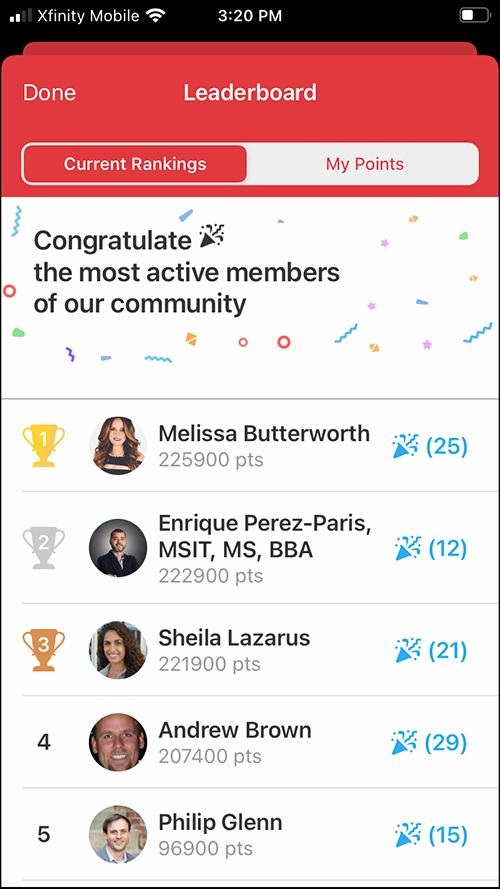
Butterworth spoke during a special session at the Executive War College. She also took the No. 1 spot on the meeting app’s leaderboard for the event, collecting an impressive 225,900 points. Users gained points for the leaderboard based on activities they completed in the app.
Spirited competition ensued among the leaderboard’s top users, who jockeyed for position as the conference progressed. Plenty of off-topic conversations took place in the app as well, as attendees helped each other navigate New Orleans with tips about restaurants, local cemetery tours, or where to work out.
The leaderboard on the Whova meeting application (above) at the conclusion of this year’s Executive War College on Laboratory and Pathology Management showed the top point gainers. (Photo copyright: Dark Intelligence Group.)
Clinical Laboratory Sponsors Reached Out to Attendees in New Ways
For sponsors and other vendors visiting the conference, the meeting app provided a different avenue to approach attendees beyond the typical networking that takes place during breaks, cocktail receptions, luncheons, and off-site parties.
For example, some sponsors shared white papers or YouTube videos via the app’s community boards or asked questions about topics of interest. Additionally, sponsors could respond directly to queries from attendees.
“At the Executive War College, there was clearly a sustained exchange between vendors looking to engage business development opportunities and participants who have pain points that need to be addressed and are looking for solutions,” Michel said.
The next Executive War College will return to New Orleans on April 25-26, 2023. Click on this link to access early registration discounts.
Labcorp, the commercial laboratory giant headquartered in Burlington, N.C., has billions of diagnostic test results archived. It takes samplings of those results and runs them through a machine learning algorithm that compares the data against a condition of interest, such as chronic kidney disease (CKD). Machine learning is a subdiscipline of AI.
Based on patterns it identifies, the machine learning algorithm can predict future test results for CKD based on patients’ testing histories, explained Stan Letovsky, PhD, Vice President for AI, Data Sciences, and Bioinformatics at Labcorp. Labcorp has found the accuracy of those predictions to be better than 90%, he added.
Labcorp also has created an AI-powered dashboard that—once layered over an electronic health record (EHR) system—allows physicians to configure views of an individual patient’s existing health data and add a predictive view based on the machine learning results.
For anatomic pathologists, this type of setup can quickly bring a trove of data into their hands, allowing them to be more efficient with patient diagnoses. The long-term implications of using this technology are significant for pathology groups’ bottom line.
Stan Letovsky, PhD (above), Vice President for AI, Data Sciences, and Bioinformatics at Labcorp, discussed AI developments in digital pathology during his keynote address at the 2022 Executive War College in New Orleans. “The best thing as a community that we can do for patients and their physicians with AI is to identify care gaps early on,” he said, adding, “If pathologists want to grow and improve their revenue, they have to be more productive.” (Photo copyright: Dark Intelligence Group).
Mayo Clinic Plans to Digitize 25 Million Glass Slides
In other AI developments, Mayo Clinic in Rochester, Minn., has started a project to digitally scan 25 million tissue samples on glass slides—some more than 100 years old. As part of the initiative, Mayo wants to digitize five million of those slides within three years and put them on the cloud, said pathologist and physician scientist Jason Hipp, MD, PhD, Chair of Computational Pathology and AI at Mayo Clinic.
“We want to be a hub within Mayo Clinic for digital pathology,” Hipp told Executive War College attendees during his keynote address.
Hipp views his team as the bridge between pathologists and the data science engineers who develop AI algorithms. Both sides must collaborate to move AI forward, he commented, yet most clinical laboratories and pathology groups have not yet developed those relationships.
“We want to embed both sides,” Hipp added. “We need the data scientists working with the pathologists side by side. That practical part is missing today.”
The future medical laboratory at Mayo Clinic will feature an intersection of pathology, computer technology, and patient data. Cloud storage is a big part of that vision.
“AI requires storage and lots of data to be practical,” Hipp said.