At least a dozen sessions at the 2025 Executive War College explored artificial intelligence use in clinical labs
Although not explicitly stated, it was clear at the 2025 Executive War College on Diagnostics, Clinical Laboratory, and Pathology Management conference that artificial intelligence must be a path forward for labs to control costs in an unfavorable economic environment.
Even though the technology is largely unproven in clinical lab settings, the potential of artificial intelligence (AI) in labs is enough reason for laboratory leaders to explore it further.
“AI is allowing us to drive our business,” said Sam Terese, CEO and president at Alverno Laboratories, during a general session at the Executive War College. “It is really resonating that we need to use AI in the future.”
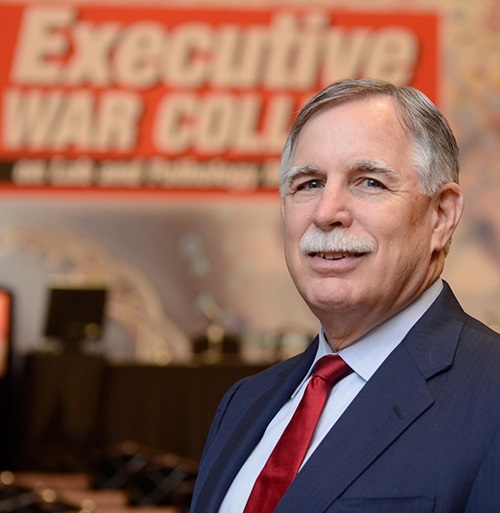
Clinical laboratory leaders should constantly ask themselves whether there is an AI solution to a problem, advised Sam Terese (above), CEO and president at Alverno Laboratories. Terese spoke at the 2025 Executive War College. (Photo copyright: LabX.)
‘Not a Lot of Trust’ in AI from Patients
Terese acknowledged that patients do not yet feel comfortable with the technology. “When you throw AI and healthcare together, from the public’s perspective, there’s not a lot of trust,” he said.
That said, Alverno is committed to increased use of AI in clinical labs in 2025, including for:
Terese urged laboratory owners and executives to not underestimate how quickly AI adoption could spread within the clinical lab industry. Digital pathology took half a century to evolve into its current state, but “AI took five years. The timeline is moving rapidly,” he observed.
Don’t Move Blindly Forward with AI, Experts Warn
At least a dozen sessions at this week’s Executive War College addressed an aspect of AI in labs.
Lab leaders must advise their staff to use AI with systems or processes that can tolerate mistakes because AI will get things wrong, Cecchini added.
“I treat AI like an eager intern where you have to check everything it does,” he said.
Presenter Ankit Ranjan, PhD, founder of AI company Sample Healthcare, agreed with that sentiment. He suggested that clinical laboratories should consider AI as a copilot until its algorithms can prove to lab staff that conclusions or predictions are accurate. The long game for AI in labs is not to cut a few staff from the budget but instead act as a revenue driver.
“Inserting AI into end-to-end processes is what really addresses problems,” Ranjan said.
Watch for much more coverage about the state of AI in clinical laboratories in upcoming issues of The Dark Report. If you’re not a subscriber, it’s a great time to take a free trial of our business intelligence briefings.
For the past 14 years, healthcare spending as a percentage of US gross domestic product has stayed flat—17.2% in 2010 compared to 17.8% in 2024—according to numbers presented by Robert Michel, editor-in-chief of Dark Daily and founder of the Executive War College.
“This is not auspicious for either the vendor side of the clinical laboratory business or providers,” Michel told attendees during the conference’s opening session.
“Clinical laboratories all must watch for opportunities to earn revenue through new business models,” said Robert Michel (above), editor-in-chief of Dark Daily. Michel spoke during a general session at the 2025 Executive War College on Diagnostics, Clinical Laboratory, and Pathology Management in New Orleans. (Photo copyright: LabX.)
Spending Blockades Will Push New Business Models for Labs
Michel ran through a series of other, similarly grim statistics that put hard numbers on trends that many laboratory executives and owners already suspected:
Half of Americans have less than $500 in a savings account, according to a January 2025 survey by GOBankingRates.com. Those people face tough financial decisions, including whether to postpone healthcare testing and treatment, Michel said.
Growth in Medicare spending by beneficiary generally stopped in 2010 and remained flat at around $12,500 per beneficiary as of 2023.
“Social Security and Medicaid are going to go broke sooner rather than later,” Michel predicted. “Congress has seen this problem and not reacted.”
Such financial challenges will force the need for new clinical laboratory business models. Among the key areas that will inspire these models are diagnostic data and technology, said Sam Terese, CEO and president at Alverno Laboratories, during his general session at the Executive War College.
“It comes back to using data to predict disease,” Terese explained. “If you can prevent someone from getting seriously ill, you will lower the cost of care.”
Terese pointed out the need to effectively use artificial intelligence (AI) to digest the massive amount of clinical data that labs sit on.
Another New Clinical Laboratory Business Model: Closing Care Gaps
Diagnostic laboratories should also be in the business of identifying care gaps among their patients and consumers. One subset to consider is diabetic and prediabetic people.
“Can the lab identify an A1C patient who should have come in to see their doctor based on the test result?” Michel asked. That type of approach raises the value of a lab test beyond just the result it produced, he added.
During another general session, Sonora Quest Laboratories showed how it determines risk stratification for colorectal cancer by using an algorithm that considers a patient’s age, gender, and minimum of two complete blood count test results to flag at-risk people.
“We’re able to get information to physicians to close that care gap,” said Jen Umscheid, senior director of quality, innovation, and performance excellence at Sonora Quest.
The Executive War College continues through Thursday, with an expected attendance of just over 1,000 delegates, speakers, and vendor representatives. Friday’s Dark Daily will explore how AI topics played out among curious attendees.
30th edition of the conference returns to New Orleans this week, bringing together diagnostic lab executives and innovators
Medical laboratory leaders and executives, along with diagnostic innovators from across the country, are convening in New Orleans this week for the 30th annual Executive War College on Diagnostics, Clinical Laboratory, and Pathology Management.
Given the political, regulatory, and financial upheaval occurring in the US, this year’s Executive War College gathering offers a timely opportunity for lab leaders to discuss important strategies and network with sellers.
Featuring 85 sessions across two days, attendees will delve into key topics such as revenue growth strategies, regulatory updates, AI integration, workforce development, and evolving payer dynamics.
With clinical laboratories playing an increasingly pivotal role in value-based care and patient outcomes, the 2025 conference agenda reflects a growing need for labs to operate not just as diagnostic services but as critical business units driving healthcare innovation.
Robert Michel (above), founder of the Executive War College and outgoing editor-in-chief of Dark Daily, will lead a closing session on Wednesday looking at common themes that emerged during the Executive War College. “It’s important that lab leaders take note of what they learned—whether it was during a session, networking reception, or chance meeting with a peer—before heading back to their organizations,” he said. (Photo copyright: LabX.)
Event Will Illustrate Paths Forward for Lab Industry
Robert Michel, founder of the Executive War College and outgoing editor-in-chief of Dark Daily, previously noted that smart laboratory leaders are viewing financial, staffing, and operational pressures as opportunities to move ahead.
“This path forward is informed by two longstanding precepts recognized by innovative managers,” Michel said. “One precept is ‘Change creates new winners and losers.’ The other precept is ‘Change creates opportunity.’ Savvy lab leaders recognize the powerful truths in each precept.”
The general sessions kick off Tuesday morning with a keynote address from Michel titled, “Healthcare at a Tipping Point: Why Lab Opportunities and Challenges in Coming Years Will Be Different than Those of the Past 30 Years.” The keynote will synthesize nationwide trends, setting the stage for two days of in-depth discussion.
Other general sessions on Tuesday will explore the continued move towards precision medicine, how to take innovative steps to improve lab operations, and ways to elevate the value of laboratory services.
Agenda Features More than One Dozen AI-Themed Sessions
Artificial intelligence (AI) will be another hot topic this year, particularly as labs grapple with how to harness a technology that just in the past year seems to have proliferated exponentially.
This year’s Executive War College will devote more than a dozen sessions to AI discussions, as experts from both the technology and pathology sectors dissect AI’s current capabilities, legal aspects, and financial implications.
Another major focus for 2025 is the regulatory environment. Several sessions will provide updates on the latest CLIA inspection deficiencies, where regulators stand on current concerns, and the future of laboratory developed test oversight given a federal court’s recent decision to vacate the Food and Drug Administration’s final rule on LDTs.
Wide Swath of Laboratory Influencers Expected
Nearly 1,000 attendees, speakers, and vendor representatives are expected at the Executive War College, including C-level executives, pathologists, lab directors, and business development leaders.
Watch Dark Daily this week for further updates from New Orleans, including coverage of the opening day’s general sessions and a wrap-up of what lab leaders learned during the event.
Lab professionals will learn more at the upcoming 30th annual edition of the event
Big changes and challenges are coming for the clinical laboratory anatomic pathology industry, and with them a slew of opportunities for lab and pathology practice leaders. At the upcoming 30th Annual Executive War College on Diagnostics, Pathology, and Clinical Laboratory Management, expert speakers and panelists will focus on the three most disruptive forces.
There will be more than 169 presenters at this year’s Executive War College. Those speakers include:
David Dexter, MD, clinical and laboratory pathology at M Health Fairview, and Sam Terese, president and CEO at Alverno Laboratories, who will present a strategic case study about the support labs can provide to parent hospitals when navigating new waters.
Paul Wilder, executive director of CommonWell Health Alliance, who will speak on the effort to improve the transferability and portability of patient and healthcare data in ways that improve the quality of care.
“Since the inception of The Dark Report in 1995 there has been continual change both within the US healthcare system and within the profession of laboratory medicine,” noted Robert L. Michel, Dark Daily’s editor-in-chief and creator of the Executive War College. “Now, three decades later, the following three items are imperatives for all labs: controlling costs; having adequate lab staff across all positions; and having enough capital to acquire and deploy new diagnostic technologies, along with the latest information technologies.”
“Most clinical laboratory managers would agree that many of the same operational pain points faced by labs in the 1990s exist today,” said Robert L. Michel (above), founder of the Executive War College. In an interview with Dark Daily, Michel broke down the nuances of this triad of forces and what participants in the Executive War College can expect. (Photo copyright: LabX.)
Forces at Work in Clinical Labs and Pathology Groups
Here’s a more detailed look at each of the forces that Michel noted.
Force 1: An acute shortage of experienced lab scientists
“When you look at the supply-demand for laboratory personnel in the United States today, it is recognized that demand exceeds supply, and that gap continues to widen,” Michel noted. “For example, in the case of anatomic pathologists, the increased number of case referrals grows faster than medical schools can train new pathologists. Currently, the ability of pathology laboratories large and small to hire and retain an adequate number of pathologists is a challenge.”
Executive War College attendees can expect panelists and speakers to highlight creative problem solving techniques to circumvent the challenges labor shortages cause.
Force 2: New applications of artificial intelligence
“Today every instrument vendor, every automation supplier, every software supplier, every service supplier is telling labs that they have artificial intelligence (AI) baked inside,” Michel observed. “It is important for lab managers to understand that a variety of technologies are used by different AI solutions.”
Clinical laboratory managers and pathologists interested in acquiring a deeper understanding of where to start with AI in their lab will find numerous sessions on artificial intelligence at this year’s Executive War College. “There will be a number of sessions this year where clinical labs discuss their success deploying various AI solutions,” Michel said.
Force 3: Financial stress across the entire US healthcare system
“It’s recognized that a significant number of US hospitals and integrated delivery networks (IDNs) are struggling to maintain adequate operating margins,” Michel noted. “This obviously impacts the clinical laboratories serving these hospitals. If the hospitals’ cash flows and operating profit margins are being squeezed, typically the administration comes to the lab team and says, ‘Your budget for next year will be x% less than this year.’
“There are many IDNs and hospital labs where budget cuts have happened for multiple years,” Michel continued. “As a consequence, labs in these hospitals must be nimble to maintain a high-quality menu of diagnostic tests. Several years of such budget cuts by the parent hospital can undermine the ability of the clinical lab team to offer competitive salary packages to attract and retain the clinical lab scientists, pathologists, and clinical chemists they need.”
Recognizing Opportunities in Today’s Lab Market
The good news is that—despite the negative forces acting upon the US healthcare system today—clinical laboratories, genetic testing companies, and anatomic pathology groups have a path forward.
“This path forward is informed by two longstanding precepts recognized by innovative managers. One precept is ‘Change creates new winners and losers.’ The other precept is ‘Change creates opportunity,’” Michel said. “Savvy lab leaders recognize the powerful truths in each precept.
“As healthcare has changed over the past four decades, nearly all the regional and national laboratories that were dominant in 1990, for example, don’t exist today!” he noted. “And yet, even as these lab organizations disappeared, new clinical lab organizations emerged that recognized healthcare’s changes and organized themselves to serve the changing needs of hospitals, office-based physicians, payers, and patients.”
All of these critical topics and more will be covered during the 30th Annual Executive War College on Diagnostics, Clinical Laboratory, and Pathology Management on April 29-30, 2025, at the Hyatt Regency in New Orleans. Signup today to bring your lab’s management team by registering at https://www.executivewarcollege.com.
However, effective communication can bring more harmony to medical lab managers and scientists when it comes to compliance
Depending on how lab professionals view it, clinical laboratory regulations can be characterized as a series of checklists to fill out or an opportunity to grow an organization.
Leaning into the latter option will preserve regulatory compliance while also ensuring the operational health of the clinical laboratory.
At the Lab Manager Leadership Summit, Kelly VanBemmel, MS, MB(ASCP)CM (above) pressed attendees to open the lines of communication between bench scientists and lab managers when it comes to clinical laboratory regulations. (Photo copyright: Scott Wallask.)
‘There’s a Gap’ in How Both Sides View Regulatory Compliance
VanBemmel spent her presentation aiming to bridge the rift between how bench scientists look at clinical laboratory regulations compared to the views of medical lab managers.
“There’s a gap between how staff experience regulations and how management does,” she noted. “Staff typically think of compliance as a checklist to do their jobs.” Managers, however, need to understand a wider compliance picture. She illustrated her point by comparing views on the following regulatory bodies.
Staff understand that the FDA clears tests and devices for use in non-research environments, though not all consumables or equipment are in that setting.
Managers understand that the FDA develops rules and guidance for CLIA complexity categorization.
Communication Leads to Common Ground with Clinical Laboratory Regulations
Given the above differences among managers and staff, VanBemmel explained that both sides must frequently talk to each other to fill in the missing details.
“When you’re in the thick of regulations, communication becomes critical,” she said.
For example, bench staff may feel it is solely their manager’s responsibility to comply with clinical laboratory regulations. Savvy lab leaders will point out non-compliant conditions—such as diagnostic analyzer malfunctions and sample cross contamination—over which bench staff have direct control, helping workers better understand their responsibility when it comes to compliance.
On the other hand, lazy communication from managers to their bench scientists can stunt compliance efforts. She recalled a prior supervisor who often answered questions about regulations by asking: What does the standard operation procedure state?
“That answer wasn’t particularly helpful,” VanBemmel recalled. “That made me think that my supervisor didn’t understand nuance.”
Thorough communication builds greater trust, and seasoned clinical laboratory professionals of all ranks will quickly recognize the compliance benefits when the worker-manager relationship gels.
Robert Michel, founder of TDIG and editor-in-chief of The Dark Report, explained that the acquisition serves as step one to winding down his long career.
“First and most important, this starts my path toward retirement,” Michel said in the March 10 issue of The Dark Report. “I’ve served in the clinical laboratory industry for 34 years now. That’s one-third of a century!”
More Options Ahead for Dark Daily Readers
In purchasing the assets of TDIG, LabX Media Group adds to its powerhouse of resources for clinical laboratory leaders, including Today’s Clinical Lab, G2 Intelligence, and Lab Manager.
The deal will give readers of Dark Daily further options from which to get their laboratory science and operations information, as Today’s Clinical Lab provides free content in areas such as pathology and clinical laboratory technology.
Additionally, “The lab science coverage in Today’s Clinical Lab complements the business intelligence of The Dark Report, allowing LabX Media to offer a more comprehensive range of information for clinical lab professionals,” Today’s Clinical Lab wrote last week.
“The good news for all the clients and long-time readers of The Dark Report is that LabX has both the capital and the specialized expertise required to keep The Dark Report, Dark Daily, and the Executive War College at the top of their games going forward,” said Robert Michel (above), founder of The Dark Intelligence Group, which sold its assets to LabX Media Group. (Photo copyright: LabX.)
Statement on LabX Purchase of The Dark Intelligence Group
In a statement about this transaction, LabX Media Group CEO Bob Kafato said: “We are excited to formally recognize these new additions to the LMG family. TDIG’s flagship publication, The Dark Report, has a 30-year track record of delivering timely business intelligence to the leaders of North America’s most successful clinical laboratories, genetic testing companies, and anatomic pathology groups. During these same 30 years, the Executive War College has become the biggest and the highest-profile laboratory management conference in North America.”
Michel will serve as an advisor to LabX Media Group to ensure a smooth transition while continuing to provide strategic consulting services to the lab industry.
Who is LabX Media Group?
LabX Media Group is a leading business-to-business science media company delivering award-winning editorial coverage, essential industry news, analysis, and insights for members of the scientific research and life science communities. LabX Media Group connects laboratory professionals with resources to help them make smarter buying decisions through powerful, market-leading brands.
One interesting final fact: TDIG and LabX Media Group both were founded in 1995 and are celebrating their respective 30-year anniversaries, Michel noted.