Representatives from almost 50 different clinical laboratories, professional associations, and societies came together this week to align efforts to expand the supply and retention of qualified laboratory scientists
FORT WORTH, TEXAS—Last week, representatives from a broad cross section of clinical laboratories, lab and pathology associations, public health laboratories, and lab regulatory bodies gathered specifically to identify ways to expand the number of skilled lab professionals.
COLA organized the “Workforce Action Alliance Summit,” a one-day gathering of key clinical laboratory stakeholders who share a common interest in developing initiatives that would directly increase the number of individuals choosing to pursue a career in laboratory medicine.
This is not a new problem, as the lack of trained laboratory scientists across all scientific disciplines has been acute for many years.
In a communication sent to invited participants, COLA’s CEO, Nancy Stratton, and COO, Kathy Nucifora, described the objective of the summit, writing:
“Clearly a call to collective action is required if we are to address the impending clinical laboratory workforce shortage. The past three years have demonstrated the significance of a resilient laboratory infrastructure, not only for the daily care of millions of Americans, but also during the global pandemic. The numerous efforts currently underway to resolve the shortage are unquestionably a component of the solution. Many, however, believe that these efforts are insufficient to close the gap between the projected number of new entrants into the profession, the rate at which those currently in the profession are departing, and the future demand for laboratory testing.”
Robert L. Michel, Editor-in-Chief of Dark Daily’s sister publication The Dark Report was a participant at COLA’S workforce summit. The Dark Report regularly profiles clinical laboratory organizations that have developed innovative and productive initiatives designed to increase the number of students choosing to train as medical technologists (MTs), clinical laboratory scientists (CLSs), medical laboratory technologists (MLTs) and other skilled lab positions.
In materials distributed at the summit, the ongoing gap between demand for skilled lab professionals and the supply was illustrated thusly:
“The US Department of Labor estimates 320,000 bachelors and associates degreed laboratory professionals are working in the United States. If each of those professionals worked a standard 40-year career, the natural annual attrition of 2.5% would require 8,000 new professionals to maintain their current numbers. This exceeds the current output of accredited educational programs by more than 1,000 annually.”
Case Studies of Success
Over the course of the day, participants at the summit heard about the successes of certain laboratory organizations designed to get more students into training programs, supported by the educational courses required for them to become certified in their chosen area of laboratory medicine. These case studies centered around several themes:
Obtaining funding specifically to establish an MT/CLS training program to increase the number of candidates in a region. One example involved ARUP Laboratories and its success at working with a local Congressional representative to get a $3 million federal grant funded as part of a larger legislative package.
The medical laboratory scientist (MLS) program at Saint Louis University (SLU) worked with Quest Diagnostics to launch an accelerated bachelor’s degree program. The 16-month program combines online academic courses with intensive hands-on learning and clinical experiences in Quest’s Lenexa, Kansas, laboratory. The first students in this accelerated degree program began their studies in the spring semester of 2023.
By rethinking the structure of its existing didactic and experiential learning structure, NorthShore University HealthSystem’s MLS program, located at Evanston Hospital north of Chicago, doubled its enrollment capacity.
During the afternoon, working groups addressed ways that lab organizations can collaborate to increase recruitment and retention of laboratory scientists across all disciplines of lab medicine. This input was synthesized into action planning for the three priorities that can lead to expanding the lab workforce.
By day’s end, several working groups were organized with specific next steps. COLA is taking the lead in managing this initiative and giving it momentum. All clinical laboratory professionals and pathologists are welcome to participate in the Workforce Action Alliance (WAA). Anyone wishing to learn more can contact COLA by clicking here, calling 800-981-9883, or by visiting https://education.cola.org/contact-us-page.
Even US military clinical laboratories strive to cut costs, protect quality, and improve outcomes
Defense Health Agency (DHA), a part of the federal Department of Defense (DOD), recently launched a plan to consolidate healthcare facilities within certain geographical regions and to unify and integrate the military’s clinical laboratory operations in those areas. The goal is to streamline efficiencies and lower costs while maintaining quality lab testing services.
The DOD operates a nationwide network of medical treatment facilities (MTFs) that include state-of-the-art clinical and anatomic pathology laboratories serving military personnel and their families. These military labs face the same issues of cost, efficiency, and outcomes as do civilian clinical laboratories throughout the United States.
To address those challenges and bring together clinical laboratory services in specific regions, the DHA established the Tidewater Market in April of 2021 to serve select US Air Force, Army, and Navy MTFs in the Washington DC metro area, central North Carolina, Jacksonville, and coastal Mississippi.
Tidewater is the fifth Military Health System (MHS) market created to manage MTFs as they transition into the DHA.
Health.mil—a website maintained by the MHS as an informational resource for those it serves—describes the MHS as “one of America’s largest and most complex healthcare institutions, and the world’s preeminent military healthcare delivery operation.
“Our MHS saves lives on the battlefield, combats infectious disease around the world, and is responsible for providing health services through both direct care [at military hospitals and clinics known as ‘military treatment facilities’] and private sector care to approximately 9.6 million beneficiaries, composed of uniformed service members, military retirees, and family members,” Health.mil notes.
With 9.6 million beneficiaries, MHS is one of the largest healthcare service organizations operating in the United States.
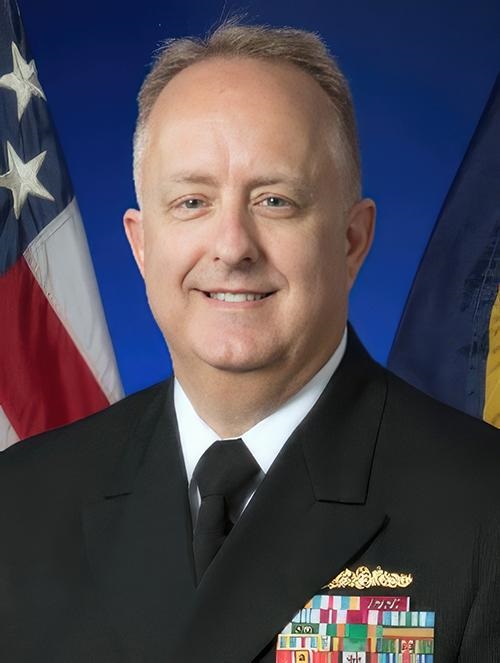
“The establishment of this market provides a true opportunity to optimize healthcare for our beneficiaries by focusing on outcomes and access across the Tidewater market,” said Navy Rear Admiral Darin Via, MD, Tidewater market manager, in an MHS/DHA news release. “It also allows us to work towards standardization of processes, creating an easier environment for our patients to navigate within.” (Photo copyright: US Navy.)
Finding Efficiencies, Optimizing Clinical Laboratory Processes and Services
In an article outlining the Tidewater Market clinical laboratory initiative, Health.mil noted that “A market is a group of MTFs in one geographic area working together with its TRICARE partners, Veterans Affairs hospitals, other federal healthcare organizations, private sector teaching hospitals and medical universities, as well as other healthcare partners. Markets operate as a system to support the sharing of patients, staff, budget, and other functions across facilities to improve readiness and the delivery and coordination of health services.”
The Tidewater Market provides integrated, affordable, high-quality healthcare services to active-duty service members, military retirees, reservists and national guardsmen, and their families. The market currently serves more than 390,000 beneficiaries.
In 2022, the Tidewater Market Laboratory/Pathology Integration Working Group was created to optimize services while reducing costs within the market. The group was created by US Navy Captain Stacie Milavec, who has more than 23 years of experience in military medicine.
“One of DHA’s goals with setting up a market structure is to find efficiencies and optimize and standardize processes and services wherever possible,” Milavec said in an MHS/DHA news release. “We’ve been able to do exactly that by collaborating within our working group.”
Resource Sharing between Military Clinical Laboratories
The MTFs that are geographically close to each other helped expedite turnaround times for testing results. By working together, they saved the Tidewater Market an estimated $80,000 during fiscal year 2022.
One of the methods they used to streamline testing and lower costs was to allow resource sharing between facilities within the market. For example, the full-service clinical laboratory located at the Naval Medical Center Portsmouth (NMCP) began performing head and neck pathology cases, breast biopsies, and PAP testing for some of the other facilities within the Tidewater Market. These services were previously performed by other means and in some cases were sent to commercially-contracted clinical laboratories for analysis at a high cost.
The NMCP also took on Human Papilloma Virus (HPV) testing for all MTFs within the market.
In February of 2023, NMCP began taking on additional clinical chemistry tests from the 633rd Medical Group at Joint Base Langley-Eustis located in Hampton, Virginia. Prior to that collaboration, those tests were sent out to contracted labs off-base for analysis.
“[Through collaboration between the MTFs] we’ve been able to successfully transition civilian marketplace send-out testing back into the military market by utilizing market resources,” said pathologist US Air Force Captain Dianna Chormanski, MD, Laboratory Medical Director with the 633rd Medical Group at Joint Base Langley-Eustis, in the press release. “I’m a big fan of cooperation and working together, and that’s what a market should be.”
The DHA established the market-based structure as part of the National Defense Authorization Act for Fiscal Year 2017. It’s an example of regional laboratory consolidation within one region of the US where a common effort brought together clinical laboratories operating on military bases of different services. The military’s goal was a unified, integrated medical laboratory operation that could deliver targeted cost savings while maintaining quality lab testing services. It appears to be successful.
Factors contributing to shortage of med techs and other lab scientists include limited training programs in clinical laboratory science, pay disparity, and staff retention, notes infectious disease specialist Judy Stone, MD
Staff shortages are a growing challenge for medical laboratories, and now the problem has grabbed the attention of a major media outlet.
In a story she penned for Forbes, titled, “We’re Facing a Critical Shortage of Medical Laboratory Professionals,” senior contributor and infectious disease specialist Judy Stone, MD, wrote, “Behind the scenes at every hospital are indispensable medical laboratory professionals. They performed an estimated 13 billion laboratory tests in the United States each year before COVID. Since the pandemic began, they have also conducted almost 997 million diagnostic tests for COVID-19. The accuracy and timeliness of lab tests are critically important, as they shape approximately two-thirds of all medical decisions made by physicians.”
Though Stone states in her Forbes article that clinical laboratories in both the US and Canada are facing staff shortages, she notes that the problem is more acute in the US.
As Dark Daily reported in February, the so-called “Great Resignation” caused by the COVID-19 pandemic has had a severe impact on clinical laboratory staffs, creating shortages of pathologists as well as of medical technologists, medical laboratory technicians, and other lab scientists who are vital to the nation’s network of clinical laboratories.
In her analysis, however, Stone accurately observes that the problem pre-dates the pandemic. For examples she cites two surveys conducted in 2018 by the American Society for Clinical Pathology (ASCP):
Many pathologists and clinical laboratory managers would agree that Stone is right. Dark Daily has repeatedly reported on growing staff shortages at clinical laboratories worldwide.
And in “Lab Staffing Shortages Reaching Dire Levels,” Dark Daily’s sister publication, The Dark Report, noted that CAP Today had characterized the current lab staffing shortage as going “from simmer to rolling boil” and that demand for medical technologists and other certified laboratory scientists far exceeds the supply. Consequently, many labs now use overtime and temp workers to handle daily testing, a strategy that has led to staff burnout and more turnover.
“There is a critical shortage of medical laboratory professionals in the US, and in Canada to a lesser extent,” wrote infectious disease specialist Judy Stone, MD (above), in an article she penned for Forbes. “Here [in the US],” she added, “we are 20-25,000 short on staff, with only 337,800 practicing. That is roughly one medical laboratory scientist per 1,000 people.” Clinical laboratories are well aware of the problem. A solution to solve it and return labs to former staffing levels is proving elusive. (Photo copyright: Forbes.)
Why the Shortfall?
In her Forbes article, Stone notes the following as factors behind the shortages:
Decline in training programs. “There are only [approximately] 240 medical laboratory technician and scientist training programs in the US, a 7% drop from 2000,” Stone wrote, adding that some states have no training programs at all. She notes that lab technicians must have a two-year associate degree while it takes an average of five years of post-secondary education to obtain a lab science degree.
Pay disparities. Citing data from the ASCP, Stone wrote that “medical lab professionals are paid 40%-60% less than nurses, physical therapists, or pharmacists.” Moreover, given the high cost of training, “many don’t feel the salary is worth the high investment,” she added.
Staff retention. In the ASCP’s 2018 job satisfaction survey, 85.3% of respondents reported burnout from their jobs, 36.5% cited problems with inadequate staffing, and nearly that many complained that workloads were too high.
Inconsistent licensing requirements. These requirements “are different from state to state,” Stone wrote. For example, the American Society for Clinical Laboratory Science (ASCLS) notes that 11 states plus Puerto Rico mandate licensure of laboratory personnel whereas others do not. Each of those states has specific licensing requirements, and while most offer reciprocity for other state licenses, “California [for example] does not recognize any certification or any other state license.”
In a 2018 report, “Addressing the Clinical Laboratory Workforce Shortage,” the ASCLS cited other factors contributing to the shortages, including retirement of aging personnel and increased demand for lab services.
Possible Solutions
Stone suggested the following remedies:
Improve working conditions. “We need to reduce the stress and workload of the lab professionals before we reach a greater crisis,” Stone wrote.
Standardize state certification. This will facilitate “mobility of staff and flexibility in responding to needs,” Stone suggested.
Improve education and training opportunities. The ASCLS has called for clinical lab science to be included in the Title VII health professions program, which provides funding for healthcare training. Rodney Rohde, PhD, a clinical laboratory science professor at Texas State University, “also suggests outreach to middle and high school STEM programs, to familiarize students early with career opportunities in the medical laboratory profession,” Stone wrote.
Recruit foreign workers. Stone suggested this as an interim solution, with programs to help them acclimate to practice standards in the US.
It will likely take multiple solutions like these to address the Great Resignation and bring the nation’s clinical laboratory staffing levels back to full. In the meantime, across the nation, a majority of clinical laboratories and anatomic pathology groups operate short-staffed and use overtime and temporary workers as a partial answer to their staffing requirements.
CAP president maintains medical laboratory staff are ‘indispensable’ in pandemic fight and should be in ‘top tier’ for vaccination
As COVID-19 vaccinations continue to roll out, the College of American Pathologists (CAP) is lobbying for clinical pathologists and medical laboratory staff to be moved up the priority list for vaccinations, stating they are “indispensable” in the pandemic fight.
In a news release, CAP’s President Patrick Godbey, MD, FCAP argued for the early vaccination of laboratory workers, “It is essential that early access to the vaccine be provided to all pathologists and laboratory personnel,” he said. “Pathologists have led throughout this pandemic by bringing tests for the coronavirus online in communities across the country and we must ensure that patient access to testing continues. We must also serve as a resource to discuss the facts about the vaccine and answer questions patients, family members, and friends have about why they should get the vaccine when it is available to them.”
In a phone call following a virtual press conference, pathologists and CAP President Patrick Godbey, MD (above), told MedPage Today that even if medical laboratory staff are not directly in contact with patients, they should be considered “top tier” (designated as Phase 1a) for getting the vaccine. “I think they [clinical laboratory workers] should be considered in the same tier as nurses,” said Godbey, who also is Laboratory Director at Southeastern Pathology Associates and Southeast Georgia Health System in Brunswick, Ga. “They’re indispensable. Without them, there’d be no one to run the tests.” (Photo copyright: Southeast Georgia Health System.)
Who Does CDC Think Should Be First to Be Vaccinated?
According toThe New York Times (NYT), there are an estimated 21 million healthcare workers in the United States, making it basically “impossible,” the NYT wrote, for them all to get vaccinated in the first wave of COVID-19 vaccinations.
A December 11, 2020, CDC Morbidity and Mortality Weekly Report, titled, “ACIP Interim Recommendation for Allocating Initial Supplies of COVID-19 Vaccine—United States, 2020,” notes that “The [federal] Advisory Committee on Immunization Practices (ACIP) recommended, as interim guidance, that both 1) healthcare personnel and 2) residents of long-term care facilities be offered COVID-19 vaccine in the initial phase of the vaccination program.”
The ACIP report defines healthcare personnel as “paid and unpaid persons serving in healthcare settings who have the potential for direct or indirect exposure to patients or infectious materials.”
However, a CDC terminology guidance document listed at the bottom of the ACIP report states, “For this update, HCP [Healthcare Personnel] does not include dental healthcare personnel, autopsy personnel, and laboratory personnel, as recommendations to address occupational infection prevention and control (IPC) services for these personnel are posted elsewhere.”
In part, the letter stated, “We are convinced that ACIP did not intend to exclude any healthcare workers from its recommendation to offer vaccinations to healthcare personnel in the initial phase of the COVID-19 vaccination program (Phase 1a). However, we would hate for jurisdictions to overlook dental, autopsy, and laboratory personnel because of a minor footnote in [CDC] guidance that was developed for an entirely different purpose (i.e., infection control).
“We respectfully ask CDC to clarify,” the letter continues, “… that all healthcare workers—including dental, autopsy, and laboratory personnel—are among those who should be given priority access to vaccine during the initial phase of the COVID-19 vaccination program.”
“In the laboratory, they are encountering and handling thousands of samples that have active live virus in them,” said Karger, who called clinical laboratory staff and phlebotomists the “forgotten” frontline healthcare workers. “We’re getting 10,000 samples a day. That’s a lot of handling of infectious specimens, and we do want [staff] to be prioritized for vaccination.”
Karger continued to stress the vital role clinical laboratories play not only in COVID-19 testing but also in the functioning of the overall health system. She added that staff burnout is a concern since laboratory staff have been working “full throttle” since March.
“From an operational standpoint, we do need to keep our lab up and running,” she said. “We don’t want to have staff out such that we would have to decrease our testing capacity, which would have widespread impacts for our health system and state.”
Testing for Post-Vaccine Immunity
The CAP panelists also highlighted the need to prepare for the aftermath of widespread COVID-19 vaccinations—the need to test for post-vaccine immunity.
“It’s not routine practice to check antibody levels after getting a vaccine but given the heightened interest in COVID testing, we are anticipating there is going to be some increased in demand for post-vaccine antibody testing,” Karger said. “We’re at least preparing for that and preparing to educate our providers.”
Karger pointed out that clinical pathologists will play an important role in educating providers about the type of antibody tests necessary to test for COVID-19 immunity, because, she says, only the SARS-CoV-2 spike protein antibody test will check for an immune response.
With the pandemic expected to stretch far into 2021, clinical laboratories will continue to play a crucial role in the nation’s healthcare response to COVID-19. As essential workers in the fight against infectious disease, clinical pathologists, clinical chemists, and all medical laboratory staff should be prioritized as frontline healthcare workers.
Yesterday’s presentation by Holmes was made to an audience that was clearly skeptical, and she was careful to avoid discussions about her company’s many issues and federal investigations
DATELINE: PHILADELPHIA, PA.—Yesterday, Elizabeth Holmes, CEO of Theranos, Inc., took the stage at the 68th AACC Annual Scientific Meeting & Clinical Lab Expo (AACC), the nation’s biggest clinical laboratory meeting, purportedly, for the first time ever, to deliver scientific data about her lab company’s diagnostic technologies. She also was there to answer questions from an expert panel before an attentive audience of clinical chemists and pathologists. A large number of journalists also were in attendance.
It may have escaped the notice of most of the audience—but not your intrepid editor—that the last song played over the PA system in the grand ballroom before Elizabeth Holmes was introduced and took the stage was “Sympathy for the Devil,” a big hit for The Rolling Stones in 1968. That song was an appropriate choice, since AACC’s invitation for Theranos to speak means the association is doing its own dance with the devil that some clinical chemists consider to be Theranos. (more…)