Federal judge must rule on her bid for a new trial, after former Theranos lab director Adam Rosendorff’s statement that he regrets his testimony during her criminal fraud trial
It is a rare event for a board-certified clinical pathologist to be named in national news headlines, but that is what is happening now to Adam Rosendorff, MD, who served as the CLIA laboratory director at Theranos for several years.
Rosendorff is once more the subject of news headlines because of his recent statements expressing “regret” about his testimony for the prosecution during the trial of Elizabeth Holmes, founder and ex-CEO of now defunct Theranos. This development caused attorneys for Holmes to file a motion for a new trial.
In August, Rosendorff showed up at the residence of Elizabeth Holmes and made statements to her attorneys that are the basis for the motion to conduct a new trial.
In a recent court filing requesting the new trial, Holmes’ attorneys described Rosendorff as a “star witness” for the prosecution and pointed out, “The government mentioned him more than any other government witness in both opening and closing statements, and Dr. Rosendorff testified longer than any other government witness.”
During four days of testimony last October, Rosendorff emerged as a central prosecution witness. On the stand, he supported prosecutors’ contention that Holmes knew about the accuracy issues with Theranos’ Edison blood-testing device and intentionally mislead investors and patients.
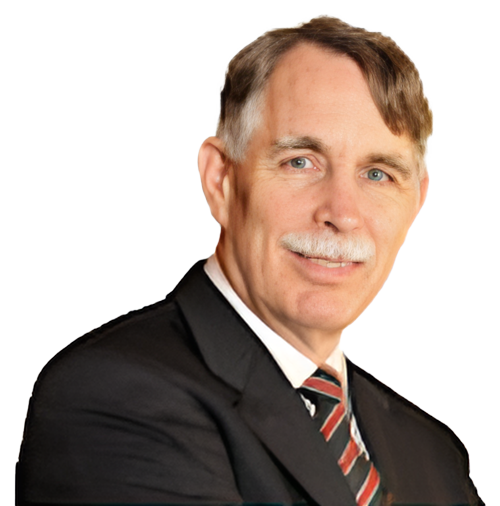
In court testimony, Adam Rosendorff, MD (above) said, “I had frequent conversations with Elizabeth about concerns that I had in the laboratory,” and [that] she was often copied on emails discussing issues, the Wall Street Journal reported at the time. As clinical laboratory leaders who closely followed his testimony know, Rosendorff was Theranos’ laboratory director from April 2013 to November 2014. (Photo copyright: LinkedIn.)
Rosendorff Attempts to Meet with Holmes
The “Dr. Rosendorff’s Encounter at Ms. Holmes’ Home” section of the 17-page filing states Rosendorff appeared at the home of Holmes and her partner William Evans on August 8 after leaving a voicemail earlier in the evening asking for a meeting with Holmes. Rosendorff allegedly had two short conversations with Evans, who told him Holmes could not speak to anyone and asked Rosendorff to leave. Rosendorff was described by Evans as speaking in a “trembling” voice and appearing to be “in distress.”
The filing goes on to state Rosendorff told Evans “that he wanted to speak to Ms. Holmes because it would be ‘healing for both himself and Elizabeth to talk.’ He stated that ‘when he was called as a witness, he tried to answer the questions honestly but that the prosecutors tried to make everyone look bad’ and that ‘the government made things sound worse than they were when he was up on the stand during his testimony.’”
The filing continues: “Dr. Rosendorff stated that ‘Theranos was early in his and [Ms. Holmes’] career,’ that ‘everyone was just doing the best they could,’ and ‘everyone was working so hard to do something good and meaningful.’”
The section concludes, “He stated that ‘he fe[lt] guilty’ and that he ‘felt like he had done something wrong,’ apparently in connection with his testimony in Ms. Holmes’ case. He stated that these issues were ‘weighing on him’ and that “he was having trouble sleeping.’”
Rosendorff’s Regrets Unlikely to Trigger New Trial
In the filing, Holmes’ attorneys wrote, “under any interpretation of his statements, the statements warrant a new trial under Rule 33. But, at a minimum … the Court should order an evidentiary hearing and permit Ms. Holmes to subpoena Dr. Rosendorff to testify about his concerns.”
Bloomberg, however, quoted criminal defense attorney Michael Weinstein, JD, Chair of Cole Schotz P.C.’s White-Collar Litigations and Government Investigations Practice, as saying Rosendorff’s misgivings about his testimony are unlikely to warrant a new trial.
“A witness having second thoughts and how they were generally perceived is not new in criminal trials but often don’t lead to new trials or much of anything,” Weinstein told Bloomberg. “The burden for that is simply too high.” Weinstein was not involved in the Holmes case.
CBS News reached out to Rosendorff via LinkedIn, who responded he had no comment, adding, “Do not contact me.”
Nevertheless, Holmes’ lawyers have proposed an October 3 hearing to discuss why they believe a new trial is merited. Their request for a new trial came less than a week after U.S. District Judge Edward Davila rejected the defense team’s bid to have Holmes’ January convictions thrown out, the Mercury News reported.
“The evidence does support the jury’s findings,” Davila said at a September 1 hearing in San Jose, California, in which he issued a preliminary ruling denying her bid to have the verdict thrown out.
Theranos Saga Continues
At the hearing, Holmes’ lawyer Amy Mason Saharia, JD, told Davila the defense team would make another attempt to overturn the jury’s findings based on “new evidence,” the Mercury News stated. That new evidence appears to be Rosendorff’s admission that he has regrets about his testimony in the case.
Holmes, 38, is currently free on bail, but faces up to 20 years in prison and a fine of $250,000, plus restitution on each of four counts. She will be sentenced on October 17. The court originally set her sentencing date for September 26, but agreed to delay her sentencing without giving a reason for the delay, CBS News reported.
Will former Theranos laboratory director Adam Rosendorff, MD’s, regrets alter the court’s previous decisions? Who knows? Many clinical laboratory directors and medical laboratory scientists followed Elizabeth Holmes’ nearly four-month long fraud trial with rapt interest. They will now have to wait a few more weeks to find out if the disgraced Theranos executive will get a new trial or a prison sentence.
Damages sought include reimbursement of costs for voided clinical laboratory tests as well as an injunction ‘to prevent Theranos and Walgreens from engaging in further misrepresentations and unfair conduct’
Theranos founder and ex-CEO Elizabeth Holmes and ex-COO/President Ramesh “Sunny” Balwani have been found guilty on multiple counts of fraud and now await sentencing in federal criminal court. But the pair’s legal entanglements are not yet over. A class-action lawsuit filed on behalf of patients who purchased Theranos clinical laboratory testing services between November 2013 and June 2016 is weaving its way through the legal system.
“The lawsuit claims, among other things, that these blood testing services were not capable of producing reliable results, that the defendants concealed the blood testing services’ unreliability, that Walgreens knew that the blood testing services were unreliable and not market-ready, that the defendants conspired to commit fraud on consumers, that Theranos’ ‘tiny’ blood testing technology (blood drawn with finger pricks) was still in development, and that the customers who were subject to ‘tiny’ Theranos blood draws by Walgreens employees gave their consent to those blood draws under false pretenses,” the news release notes.
If the defendants are found liable, plaintiffs, who could number in the hundreds of thousands, could receive money or benefits. The Mercury News reported that Arizona’s attorney general had identified 175,000 consumers who purchased tests from Theranos/Walgreens at an average cost of $60 per test.
A class-action lawsuit filed on behalf of patients who purchased Theranos blood testing services at a Walgreens or Theranos location includes as defendants company founder/CEO Elizabeth Holmes (left), ex-Theranos President/COO Ramesh “Sunny” Balwani (right), as well as Theranos, Inc., Walgreens Boots Alliance, and Walgreens Arizona Drug Company. The trial is expected to begin in 2023. It will no doubt draw the attention of clinical laboratory directors and pathologists who followed the Holmes/Balwani fraud cases very closely. (Photo copyright: The Wall Street Journal.)
Federal Court Upholds Class Certification
The Top Class Actions news site notes that in 2021 Walgreens and Balwani unsuccessfully appealed to get the class-action lawsuit against them decertified.
Class: All purchasers of Theranos testing services, including consumers who paid out-of-pocket, through health insurance, or through any other collateral source between November 2013 and June 2016.
Arizona Subclass: All purchasers of Theranos testing services in Arizona between November 2013 and June 2016.
California Subclass: All purchasers of Theranos testing services in California, between September 2013 and June 2016.
Walgreens Edison Subclass: All purchasers of Theranos testing services who were subjected to “tiny” blood draws (finger pricks) by a Walgreens employee between November 2013 and March 2015.
“The lawsuit seeks damages, including reimbursement of the amounts paid by consumers for the voided tests, as well as an injunction to prevent Theranos and Walgreens from engaging in further misrepresentations and unfair conduct,” the Lieff Cabraser website states.
In its notice to potential members of the class action, JND Legal Administration states the “defendants contend that they did not do anything wrong, and they are not liable for any harm alleged by the plaintiffs.” In addition, the notice points out, “There is no money available now, and there is no guarantee that there will be.”
Where could money come from to pay plaintiffs? Likely not from Theranos or Holmes. Though Theranos reached a peak valuation of $9 billion in 2014, it owed at least $60 million to unsecured creditors when the company was dissolved in 2018, USA Today reported. After turning over its assets and intellectual property, Theranos anticipated having only $5 million to distribute to creditors.
And Forbes reported that Holmes’ net worth dropped from $3.6 billion to $0 in 2016.
However, Balwani, who netted nearly $40 million in 2000 when he sold shares of software company Commerce One, has an estimated net worth of $90 million, according to Wealthypipo. As of 2022, Walgreens Boots Alliance is ranked number 18 on the Fortune 500 rankings of the largest United States corporations by total revenue.
The Arizona Theranos Litigation website points out that the suit does not seek damages or other relief for personal injury, emotional distress, retesting costs, or medical care costs. Any Theranos/Walgreens customer intent on pursuing such legal action would need to exclude themselves from the class action case and proceed with separate litigation. The deadline to opt out of the class-action lawsuit is September 12, 2022.
And so, though clinical laboratory directors and pathologists may have thought the saga of Theranos ended following Balwani’s conviction, it apparently continues. It is anyone’s guess what is to come.
Shultz and fellow whistleblower Erika Cheung spoke to clinical laboratory scientists and attendees at the AACC Annual Scientific Meeting in Chicago
Two whistleblowers who raised concerns about the accuracy of Theranos’ blood test results offered thought-provoking comments on how the maligned company operated within current requirements for clinical laboratory-developed tests (LDTs) during last week’s American Association of Clinical Chemistry (AACC) Annual Scientific Meeting.
“The laboratory-developed test loophole that Theranos exploited should be closed,” said Tyler Shultz, who complained about Theranos’ inaccurate testing to regulators and TheWall Street Journal. Both Shultz and fellow Theranos whistleblower Erika Cheung were former employees at the now-defunct company.
“There are a lot of good use cases for LDTs, so they shouldn’t all be shut down,” Shultz continued. “But in general, I do think that if FDA-cleared clinical laboratory tests are available, those tests should be used instead of a homebrew test that hasn’t been held to the same standard that an FDA-cleared product has.”
Both trials examined the dubious claims that Theranos’ technology worked properly during the company’s blazing ascent with both Silicon Valley investors and the media from 2003 to 2014. The company said it could take a few drops of blood from a patient and successfully analyze the specimen using a machine called Edison, although Shultz, Cheung, and others questioned the results.
By 2015, problems with Theranos’ testing began to go public. The company shut down in 2018 after Holmes and Balwani were indicted.
However, proposed legislation is before Congress that would transfer oversight of LDTs to the US Food and Drug Administration (FDA). The bill, known as the Verifying Accurate Leading-edge IVCT Development (VALID) Act, is now embedded in the larger Senate bill FDA Safety and Landmark Advancements Act of 2022 (S.4348).
Theranos’ saga did provide at least some inspiration for legislators filing the VALID Act. However, Cheung noted that trying to regulate all LDTs based the bad behavior of Theranos’ executives is a complex issue.
“Regulation is always tricky,” she said. “When you take an example of a very extraordinary case and a very specific circumstance [such as Theranos] and try to generalize that in terms of what is the behavior of all labs, you have to be careful.”
Proponents state FDA pre-market approval is needed for in vitro diagnostic tests because they are like medical devices. Opponents counter that the VALID Act would stifle innovation because of the costs involved with FDA review, particularly at academic medical laboratories.
Cheung questioned whether FDA review of Theranos’ technology would have averted patient and investor fraud by Holmes and Balwani.
“Would it have been the case that if it was necessary for the FDA to review Theranos’ LDTs, that it could have stopped it? Maybe,” Cheung told AACC attendees. “But you’re also dealing with a company that lied a lot. There were lots of things that Theranos had to submit to CLIA or to CMS in order to say that they were able to test certain types of patients.”
Shultz had similar feelings regarding a hypothetical FDA review of Theranos’ product, which will ring true with pathologists and clinical laboratory professionals who understand medical laboratory compliance and how the FDA regulate diagnostic instruments and kits.
“When you bring something to the FDA, they look at the data. They don’t go in and actually do third-party validation to see if your device works,” he said. “They just look at the data, and the [Theranos] data was largely manipulated. So, if you forced Theranos to go through the FDA process, I’m not sure if it would have prevented [the fraud].”
Balwani’s lawyers opted not to have their client testify in his own defense and called only two witnesses, while Holmes’ defense team offered jurors the opportunity to hear her testimony
Elizabeth Holmes and Ramesh “Sunny” Balwani dreamed of revolutionizing the clinical laboratory blood-testing industry with their now defunct Theranos Edison device, which they claimed could perform multiple tests with a single finger prick of blood. Instead, they became the rare Silicon Valley executives to be convicted of fraud.
On July 7, ex-COO/President Balwani was convicted on all 12 counts of wire fraud and conspiracy charges in his federal fraud trial. Holmes, Theranos’ founder/CEO and former romantic partner to Balwani, avoided convictions six months ago in January on seven of the 11 counts she faced for her role in exaggerating the accuracy and reliability of the company’s Edison blood-testing device and providing false financial claims to investors.
“Once again, a jury has determined that the fraud at Theranos reached the level of criminal conspiracy,” said FBI Special Agent in Charge Sean Ragan in a press release posted on Twitter following the verdict. “The FBI has spent years investigating this investment fraud scheme with our partners at USPIS and the FDA Office of Criminal Investigations. Lies, deceit, and criminal actions cannot replace innovation and success.”
Ramesh “Sunny” Balwani (above center), former COO/President of Theranos, is shown leaving the federal courthouse in San Jose, Calif., on July 7 after he was found guilty on all 12 counts of fraud, a verdict more severe than ex-CEO and Theranos founder Elizabeth Holmes received in January for similar charges. Clinical laboratory directors and medical laboratory scientists have been closely monitoring both trails. (Photo copyright: Jim Wilson/The New York Times.)
Balwani’s Age and Experience May Have Worked Against Him
Michael Weinstein, JD, a former Justice Department prosecutor who is the Chair of White-collar Litigation at Cole Schotz, told The New York Times that Balwani’s age and his trial date—three months after Holmes’ conviction—worked against him. Balwani, 57, could not present himself as a young and inexperienced tech executive easily manipulated by those around him, as Holmes, 38, had attempted to do.
“Holmes could come off as a bit naïve, and [her defense team] tried to sell that,” Weinstein said of the former Stanford University dropout who founded Theranos in 2003 when she was 19.
In Holmes’ case the verdict was mixed, with jurors acquitting her of the patient fraud counts but unable to reach a decision on some of the investor fraud counts, Bloomberg reported.
Mr. Balwani, however, “came off as more of an experienced technology executive,” Weinstein added.
Weinstein pointed out that because the government’s case against Balwani mirrored its case against Holmes, prosecutors had time to refine their strategy before making a second appearance inside US District Court Judge Edward Davila’s San Jose courtroom.
“The streamlined presentation, the streamlined evidence, the streamlined narrative—all was beneficial for the government in the end,” he said.
Ever since opening arguments in March, Balwani’s legal team portrayed him to the jurors as a loyal partner who believed in Theranos’ technology and “put his money where his mouth is,” the Guardian noted.
Prosecutors, however, made the case that Balwani had a hands-on role in running the lab and was the source of Theranos’ overinflated financial projections.
Balwani invested about $15 million in the startup between 2009 and 2011 and never cashed in when his stake grew to $500 million. That money evaporated when Theranos collapsed.
In all, 24 witnesses testified against Balwani. He was ultimately convicted of all 12 counts he faced:
Two counts of conspiring with Holmes,
Six counts of defrauding investors, and
Four counts of patient fraud.
Major Differences in Trial Testimony
The Balwani trial made headlines due to COVID-19 pandemic related delays, but otherwise did not produce the news-generating moments that punctuated Holmes’ nearly four-month-long court appearance. Thirty-two witnesses appeared at the Holmes trial, including Secretary of Defense James Mattis, according to CNN.
Another significant difference in the two trials was that Holmes testified in her own defense. Holmes spent nearly 24 hours on the stand, CNN Business noted at that time, during which she cast the blame for Theranos’ failings on those around her, including Balwani.
ABC NewsRebecca Jarvis, host and creator of the podcast “The Dropout,” believes Balwani’s decision not to testify worked against him.
“[The abuse claims] did not come up at his trial, but during [Holmes’] seven days of testimony, they were a big portion of what she talked about,” Jarvis said in an ABC News “Start Here” podcast. “The biggest difference is that he didn’t take the stand to say, ‘I didn’t do this,’ or … raise his own objections to the claims against him.
“You think about a jury who is supposed to know nothing about any of [the defendant’s] backstory, and they’re shown these things like … case pictures of [Holmes] so much younger than [Balwani], supposedly having to rely on him for his expertise,” Jarvis added.
“You can imagine where the jury may have found that presentation more sympathetic than Sunny Balwani who had experience,” she said.
Text May Have Been Balwani’s Undoing
Balwani’s defense team called only two witnesses:
A naturopathic physician who used Theranos’ blood-testing lab, and
A technical consultant who Balwani’s legal team hired to assess the accessibility of patient data in Theranos’ Laboratory Information System (LIS), which the defense argued could have provided evidence of the accuracy of Theranos’ test results.
“This verdict also signals the jurors did not buy Balwani’s highly speculative argument that the database Theranos lost in 2018 would have proven his innocence,” Park said.
“We are obviously disappointed with the verdicts,” he said. “We plan to study and consider all of Mr. Balwani’s options including an appeal.”
Following the verdicts, Judge Davila raised Balwani’s bail to $750,000 and set a Nov. 15 sentencing date. Holmes is scheduled to be sentenced Sept. 26.
Balwani’s own words may have been his final undoing. During closing arguments, prosecutors again showed jurors a text message Balwani sent to Holmes in 2015, The New York Times reported.
“I am responsible for everything at Theranos,” he wrote. “All have been my decisions too.”
Clinical laboratory directors and medical laboratory scientists will no doubt continue to monitor the fallout from these two extraordinary federal fraud trials. There’s still much to learn about CLIA-laboratory director responsibility and how the government plans to prevent future lab testing fraud from taking place.
Theranos ex-COO and President Balwani will be sentenced on Nov. 15, while former CEO Elizabeth Holmes has her sentencing on Sept. 26
Observers within the clinical laboratory industry likely were not surprised to hear that Ramesh “Sunny” Balwani was convicted on Thursday of 12 counts of fraud related to his work at disgraced medical laboratory testing startup Theranos.
After all, Balwani’s conviction comes six months after a similar verdict for Elizabeth Holmes, the former founder and CEO of Theranos. The two were romantically involved during their time at the company.
A jury in San Jose deliberated for several days before reaching the guilty verdict against Balwani, 57, on a dozen counts of wire fraud and conspiracy to commit wire fraud. He is the former chief operating officer and president at the Theranos. Holmes was convicted of four counts in January.
“The jury concluded that Balwani perpetrated frauds on unsuspecting patients,” Stephanie Hinds, US Attorney for the Northern District of California, told the press after the verdict.
Balwani didn’t provide any comments to the two dozen or so reporters and photographers who followed him as he left the courthouse.
Ramesh “Sunny” Balwani leaves the courthouse after being convicted on 12 counts of fraud during his Theranos trial.
Balwani, Like Holmes, Faces 20 Years Behind Bars
Balwani will be sentenced on Nov. 15, reported NBC Bay Area. Holmes is scheduled to be sentenced on Sept. 26. She and Balwani each face up to 20 years in prison on each count, although a judge could allow those terms to run concurrently for each individual.
At the core of Balwani’s trial was whether he knew that Theranos allegedly defrauded patients and investors about its proprietary Edison blood-testing machine. The government argued that Balwani realized the Edison analyzer did not work and that he should have informed investors about the poor accuracy of the equipment.
In the end, the jury did not believe Balwani’s contention that he was merely an investor who let Holmes steer business matters at Theranos. Jurors saw text messages between Balwani and Holmes that defied that defense strategy.
For example, in one text to Holmes, Balwani wrote, “I am responsible for everything at Theranos,” NBC Bay Area reported during the trial.
A profile on Balwani published in March 2022 by The Cut, a website affiliated with New York magazine, also pushed the idea he had influence. “While many questions remain about Balwani’s role in the Theranos scheme, he definitely wielded a lot of power at the company,” The Cut reported.
Balwani and Holmes were indicted by federal prosecutors in June 2018. The indictments followed a three-year investigation by the government, which occurred after a blockbuster series of articles by the Wall Street Journal that detailed complaints from whistleblowers who formerly worked at Theranos.
Balwani never took the stand in his own defense. However, during closing arguments, his attorney, Jeffrey Coopersmith, JD, said Holmes’ charm influenced Balwani, much like it did Theranos investors.
“There’s no reason why he wouldn’t have seen the exact same thing: the charisma, the drive, the vision, the goal to change diagnostic testing. And he bought into that vision,” Coopersmith told the jury, as reported by Bloomberg. “He bought into that vision not only with his time but also with his own money,” investing $4.6 million in Theranos.
Compared to Holmes’ trial, which attracted huge media attention from around the world, Balwani’s proceedings occurred to much less hype and fanfare, given he was not as well known as Holmes to the general public and press.
—Scott Wallask
Not a Dark Daily E-Briefing Service Subscriber?
Sign up for our free email service that keeps you informed on the top laboratory industry’s important events like this one three times a week!